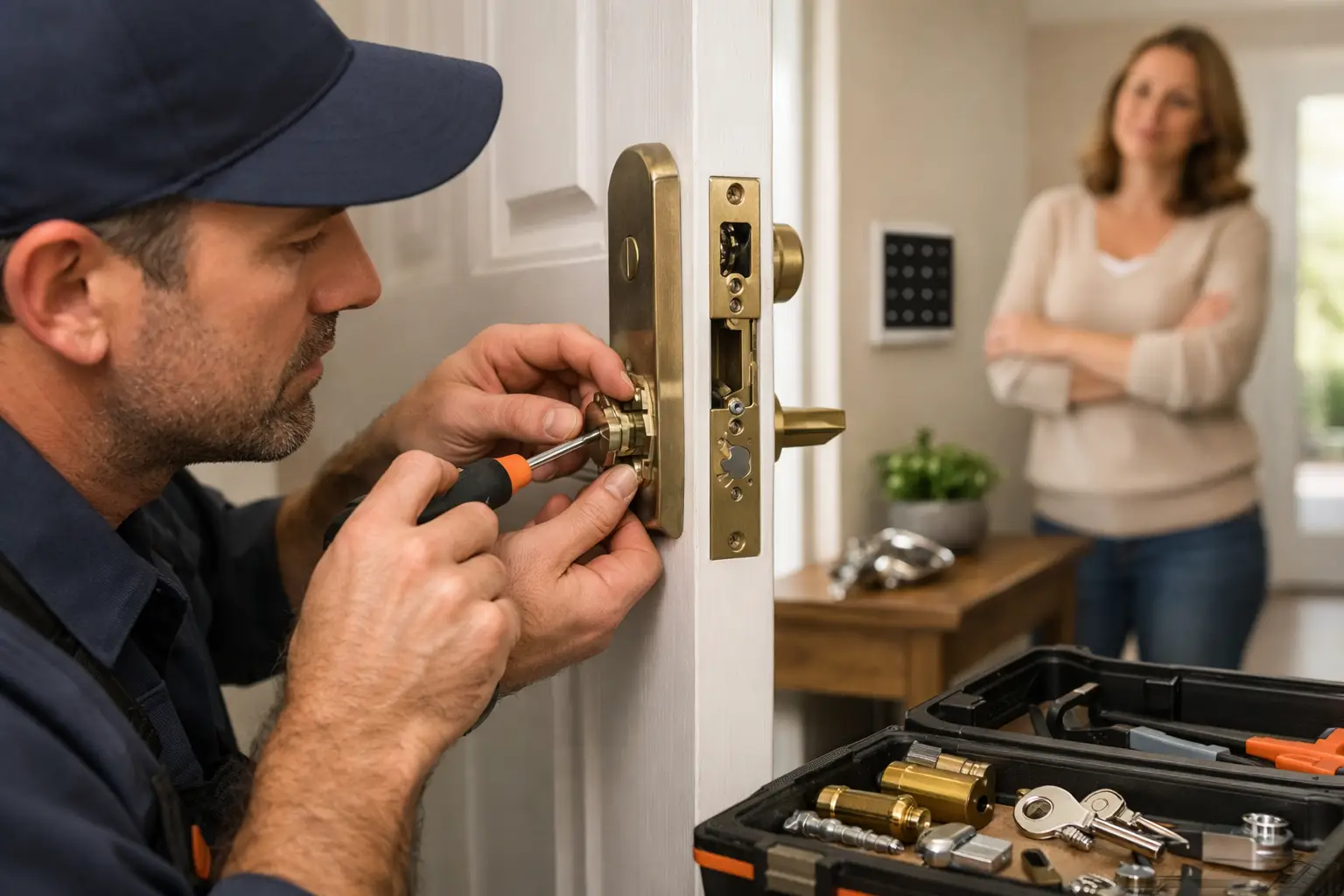
A lock rarely fails at a convenient time. The key starts sticking when you are late for work, the deadbolt stops turning after a long day, or the front door will not latch when you are trying to leave town. A door lock repair service turns that uncertainty into a clear next step - without asking you to diagnose every part of the hardware yourself.
The goal is not simply to get the key turning again. It is to restore secure, reliable entry to your home and identify whether the problem is the lock, the key, the door alignment, or damage around the frame. A trusted local pro can assess what is visible, explain the repair options, and help you avoid a temporary fix that leaves your household less secure.
When a Door Lock Repair Service Makes Sense
A lock that occasionally catches may seem minor, but small warning signs can become a lockout or a security problem quickly. Call for help when a key takes force to turn, a deadbolt binds, the latch will not catch, the lock cylinder spins freely, or the hardware feels loose. These issues can come from worn internal parts, a misaligned strike plate, loose mounting screws, a warped door, or a key that has worn down over time.
Damage after a break-in attempt deserves faster attention. Even if the door still closes, bent hardware, splintered wood, or a loose strike plate can weaken the entry point. The repair may involve more than replacing a lock. A pro may need to reinforce the frame, adjust the door, or recommend hardware that better fits the opening.
For renters, report the problem to your landlord or property manager before authorizing non-emergency work whenever your lease requires it. If the lock prevents you from securing the unit or entering safely, document the issue with clear photos and contact the property’s emergency maintenance line. Property managers benefit from quick action too: an unreliable lock can become a tenant safety issue and a more expensive repair if it damages the door or frame.
Start With What You Can Safely Check
You do not need to take apart the lock to gather useful information. Start by testing the door while it is open. If the deadbolt turns smoothly with the door open but jams when the door is closed, the likely issue may be alignment rather than the lock cylinder. Temperature changes, settling, loose hinges, and door swelling can shift the door enough that the bolt no longer enters the strike plate cleanly.
Next, try a spare key if you have one. A single worn, bent, or poorly copied key can create symptoms that look like a failing lock. Do not force it. Pushing harder can break a key in the cylinder or damage internal pins, turning a straightforward visit into a more involved repair.
Look for obvious clues around the handle and deadbolt. Is the trim plate loose? Does the latch retract fully? Is the strike plate bent or pulled away from the frame? A few clear photos of the lock, the door edge, and the frame give a service provider a better starting point than “my lock is broken.” With Ono-Fix, one photo can help identify the likely issue and route your request toward the right trusted local pro.
Avoid spraying a household oil or heavy lubricant into the keyway. These products can collect dust and make the mechanism worse over time. Also avoid removing screws from a lock while the door is closed unless you know exactly how the hardware is assembled. A partially disassembled lock can leave you unable to secure the door.
Repair, Rekey, or Replace? The Right Fix Depends
Not every lock problem calls for replacement. If the lock is structurally sound but the key no longer works reliably, rekeying may be the practical choice. A locksmith changes the internal configuration so old keys no longer operate the lock, then provides new keys. This is especially useful after moving into a home, losing a key, or changing access after a roommate, contractor, or former tenant no longer needs entry.
Repair is often the best option when the issue is caused by alignment, loose hardware, a worn latch, or a damaged strike plate. It can cost less than full replacement and preserves existing hardware when it is in good condition. The trade-off is that older locks with repeated failures may not be worth repairing more than once.
Replacement makes sense when the cylinder is badly damaged, the hardware is outdated, the lock has been compromised during a forced-entry attempt, or you want a meaningful security upgrade. A pro can help match the replacement to the door thickness, backset, existing hole pattern, and level of use. That fit matters. A high-quality deadbolt installed poorly will not perform as intended.
Smart locks add another decision point. They can offer keyless entry, temporary access codes, and activity alerts, but they also need compatible door hardware, proper alignment, battery maintenance, and a reliable installation. A smart lock is not automatically the right answer for every door. For a side gate, rental unit, or high-traffic family entrance, the best choice depends on how people actually use the space.
A note on emergency lockouts
If you are locked out, prioritize safety first. If a child, pet, vulnerable adult, or active cooking situation is inside, call emergency services when there is immediate danger. Otherwise, contact a qualified local lock professional rather than trying to force a window, pry open a door, or drill the lock yourself. DIY entry attempts often create frame damage that costs more than a professional lockout service.
What a Qualified Pro Should Assess
A good service visit starts with the whole door, not just the keyhole. The technician should check how the door sits in the frame, whether the latch and deadbolt align with the strike plate, the condition of the hinges, and any damage around the lockset. This broader look helps prevent the frustrating cycle of replacing a lock only to find that the door still will not close correctly.
They should also explain the options in plain language. You should understand whether the proposed work is a repair, rekey, replacement, or reinforcement, along with why that option fits the condition of your door. Ask whether the quote includes new keys, hardware, labor, and any door or frame repair. For smart lock installation, ask who will set up the app, access codes, and backup entry method.
Security hardware is personal. A professional should verify that you are authorized to request work at the property, especially for a rental, shared home, or managed building. That process protects residents, owners, and providers alike.
Keep the Next Lock Problem From Becoming Urgent
Most lock maintenance is simple. Keep keys clean and replace copies that are bent or visibly worn. Do not hang heavy keychains from a key while it is in the cylinder, since the extra weight can add stress over time. Check exterior doors seasonally for rubbing, sagging, or a deadbolt that needs a hard push to engage.
If you notice the door shifting, address it early. Tightening loose hinges or correcting strike alignment can prevent unnecessary wear on the lock. After moving into a new home, rekeying exterior locks gives you control over who has access, even if the previous owner says all keys were returned.
A working lock should feel ordinary: the key turns, the door latches, and everyone gets in and out without thinking about it. When that changes, take a photo, describe what you see, and get the right local help before a small inconvenience becomes a security concern.