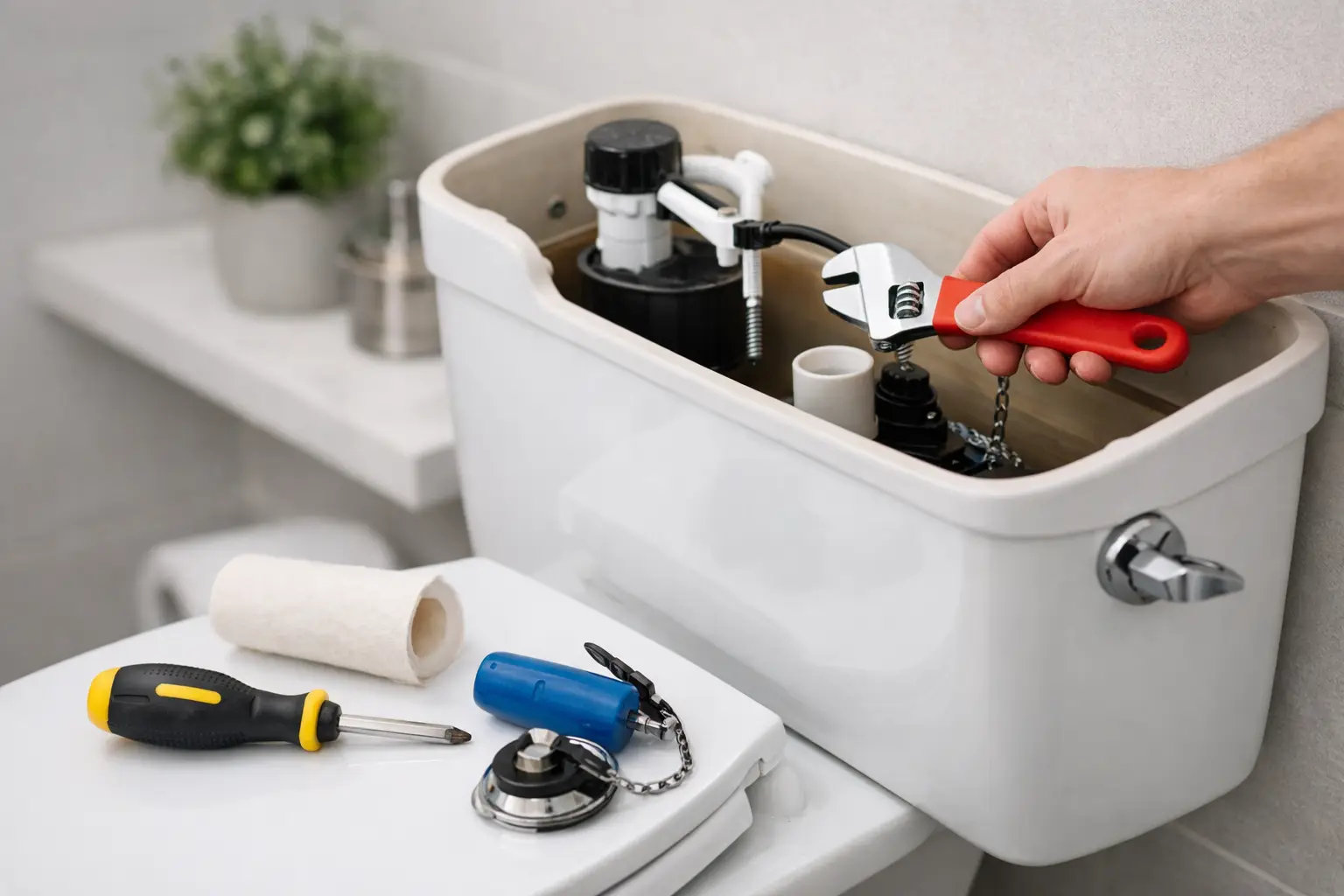
A toilet that refills every few minutes can waste a surprising amount of water - and the sound has a way of becoming impossible to ignore. If you are searching for toilet keeps running repair, start with the tank. Most causes are visible, inexpensive, and straightforward to narrow down without guessing at plumbing terms.
The goal is simple: stop the water, find where it is escaping, and decide whether this is a quick adjustment or a job for a trusted local plumber.
Toilet keeps running repair starts inside the tank
Remove the tank lid carefully and set it on a towel or stable floor surface. Porcelain lids chip easily. Then flush once and watch what happens as the tank refills.
A normal toilet fills, reaches its set water level, and stops. A running toilet usually has one of two problems: water is leaking silently from the tank into the bowl, or the fill valve is allowing too much water into the tank. Those are different issues, so what you see matters.
Before taking anything apart, locate the shutoff valve near the wall or floor behind the toilet. Turning it clockwise should stop the water supply. You may not need it right away, but knowing where it is gives you a fast way to stop a persistent refill or prevent an overflow.
If water is rising toward the top of the tank, turn off the supply now. Do not force an old, stuck valve. If it will not move easily, lift the float inside the tank to stop the fill valve temporarily, then arrange professional help.
Check whether the flapper is leaking
The flapper is the rubber or silicone seal at the bottom of the tank. It lifts when you flush and should settle flat over the flush valve opening afterward. When it is warped, dirty, cracked, or slightly out of position, water slips into the bowl. The fill valve senses the lower water level and turns on again.
A quick dye test can confirm the problem. Add several drops of food coloring to the tank water, wait 15 to 20 minutes without flushing, and look in the bowl. Colored water in the bowl means the flapper is not sealing.
First, check the chain. It should have a little slack when the flapper is closed. A chain that is too short holds the flapper open just enough to create a slow leak. A chain that is tangled, caught beneath the flapper, or wrapped around another tank part can cause the same issue.
If the chain looks right, wipe the flapper and the plastic rim it seals against with a clean cloth. Mineral buildup can prevent a good seal. If the flapper feels stiff, has visible damage, or remains misshapen after cleaning, replacement is usually the practical fix. Flappers are low-cost parts, but they are not all the same size or style. Bring the old one or a clear photo of the tank setup when buying a replacement.
A worn flush valve can look like a bad flapper
Sometimes a new flapper still leaks because the flush valve seat beneath it is rough, cracked, or heavily corroded. This is more common in older toilets. Replacing the flush valve can require removing the tank from the bowl, which is a reasonable point to call a plumber if you are not comfortable disconnecting water lines and handling porcelain.
Watch the fill valve and water level
If water is not leaking past the flapper, look at the fill valve. This is the tall assembly connected to the water supply line inside the tank. It controls refilling after a flush.
Notice the overflow tube, the open vertical tube near the center of the tank. The water level should sit below its top edge, usually around the marked fill line on the tank wall. If water continually spills into that tube, the fill valve is set too high or is failing to shut off.
Many modern fill valves have a small adjustment screw, clip, or dial. Lower the float slightly, flush, and let the tank refill. The correct setting depends on the toilet, but the water should stop below the top of the overflow tube. Lowering the water level can stop the running if the valve was simply set too high.
If the fill valve continues to hiss, runs without stopping, or only stops when you tap or lift the float, it is likely worn out. Replacing a fill valve is often a manageable repair for a confident DIY homeowner. It involves shutting off the water, flushing the tank, sponging out the remaining water, disconnecting the supply line, and installing a compatible replacement according to its instructions.
The trade-off is time and uncertainty. If the supply connection is corroded, the toilet is old, or you are not sure which part has failed, a small DIY repair can turn into a longer plumbing problem. There is no prize for forcing it.
Do not overlook the refill tube
The narrow refill tube sends water into the overflow tube after each flush. It should be clipped to the top of the overflow tube, not pushed far down inside it. If it is inserted too deeply, it can create a siphon effect that slowly pulls water from the tank and triggers repeated refilling.
Reposition the tube so it is secured above the opening. It should direct water in, not form an airtight connection. This small correction is easy to miss and can solve a toilet that seems to run for no obvious reason.
When a running toilet needs a plumber
A running toilet is usually not a major emergency, but it should not be ignored. The water bill can climb, and a failing tank component can eventually lead to an overflow or a toilet that will not flush correctly.
Call a plumber when the problem continues after a flapper and fill-valve check, when the toilet runs from a concealed tank, or when water appears around the base of the toilet. Water at the base is not a typical running-toilet symptom. It may point to a separate seal, supply line, condensation, or drain issue that needs a closer inspection.
You should also bring in a pro if the shutoff valve is stuck, the tank is cracked, the toilet rocks on the floor, or you manage a rental property and need a documented, reliable repair. For renters, notifying your landlord or property manager before replacing parts is often the right move, especially when the fixture belongs to the building.
Get the right help without naming the part
You do not need to know whether the issue is a flapper, flush valve, float, or fill valve before asking for help. Take a clear photo of the inside of the tank, including the water level and any visibly worn parts. A short video can also capture a refill cycle and make the problem easier to identify.
With Ono-Fix, one photo can help identify the visible issue and connect you with the right trusted local pro. One Photo. One Solution. That means less time trying to translate a strange toilet sound into the correct service category.
After the repair, listen through one full refill cycle and check the bowl again 20 minutes later. A quiet tank is more than a small win - it is water no longer going to waste and one less home problem following you through the day.