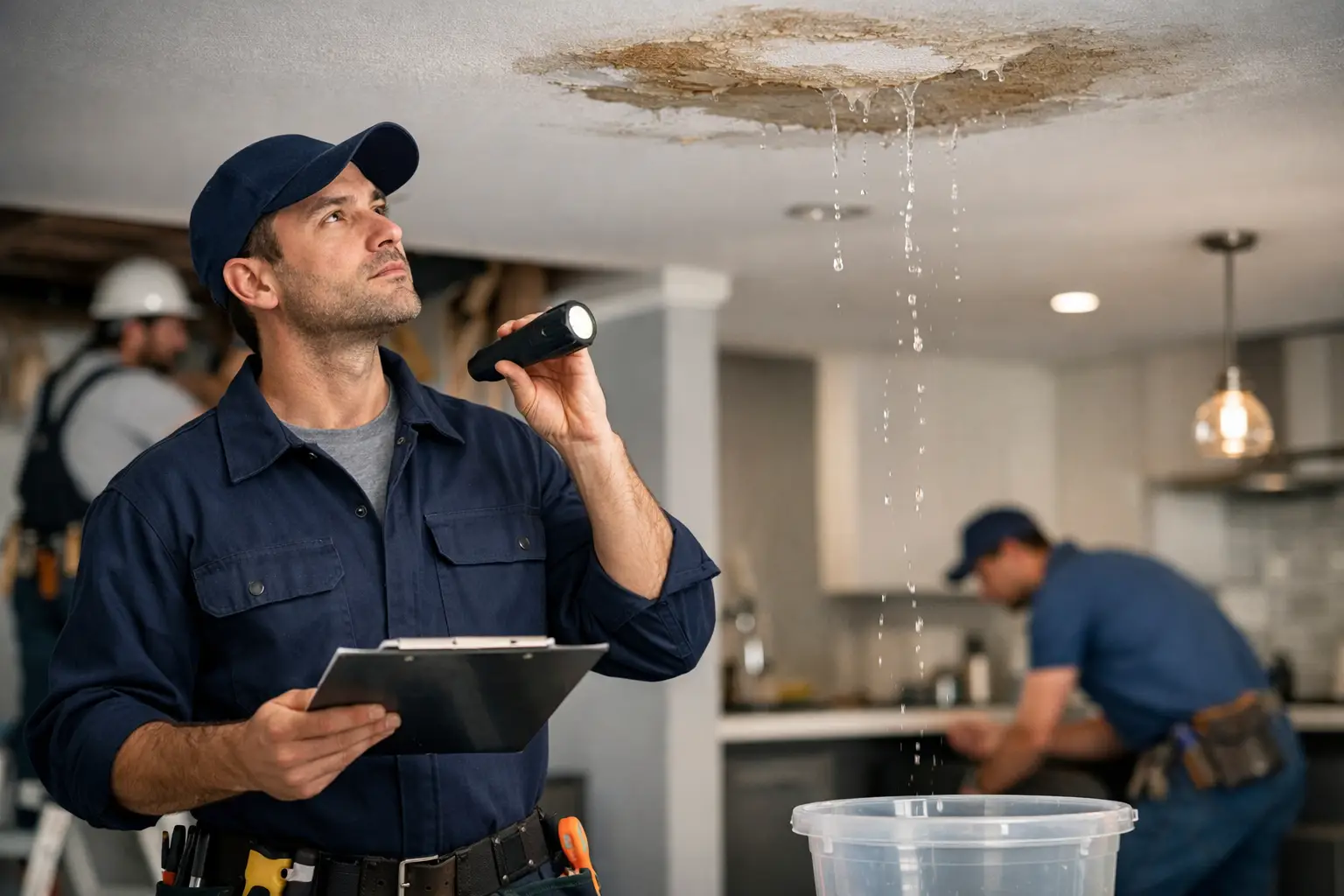
A brown ceiling stain can go from barely noticeable to dripping onto the floor faster than most homeowners expect. So, who fixes a leaking ceiling? Usually, the right answer is not a ceiling repair specialist. It is the professional who can stop the water at its source - often a plumber, roofer, HVAC technician, or emergency water-damage pro.
The ceiling is where the problem shows up. The leak may be several feet away, hidden above the drywall, inside a pipe, around a roof penetration, or near an upstairs bathroom. Acting quickly protects your home, your belongings, and potentially your insurance claim.
First, Make the Area Safe
Before you worry about paint, drywall, or matching a ceiling texture, focus on immediate safety. Move furniture, electronics, rugs, and valuables away from the wet area. Put a bucket or large container underneath an active drip, and use towels to contain spreading water.
If water is close to a light fixture, ceiling fan, outlet, or electrical panel, do not touch the fixture or switch. Turn off power to that area at the breaker only if you can do so safely. If the ceiling is sagging, bulging, or soft to the touch, stay clear. A water-filled section of drywall can collapse without much warning.
For a major active leak, especially one involving electricity, a burst pipe, or a large ceiling bulge, call emergency help immediately. This is not a wait-until-morning repair.
Who Fixes a Leaking Ceiling Depends on the Source
The person who repairs the ceiling itself may be a drywall contractor or handyman. But that work comes after the leak is found and stopped. Calling someone to patch stained drywall before locating the water source can lead to another leak, trapped moisture, mold growth, and a second repair bill.
Call a Plumber for Water From Bathrooms, Kitchens, or Pipes
A plumber is usually the first call when the leak is below an upstairs bathroom, kitchen, laundry room, or any area with water lines. Common causes include a leaking supply line, drainpipe failure, loose toilet seal, overflowing fixture, damaged shower pan, or a failing appliance connection.
A leak that appears only when someone showers, flushes a toilet, runs a dishwasher, or uses a washing machine is a strong sign that plumbing is involved. Tell the pro exactly when the leak happens. That one detail can save time during diagnosis.
If you know the leak is coming from a plumbing line and water is flowing steadily, shut off the local fixture valve if possible. If you cannot isolate it, turn off your home’s main water supply and call a plumber.
Call a Roofer for Leaks After Rain or Snow
If the ceiling leak appears during or shortly after rain, melting snow, or heavy wind, call a roofing professional. The visible stain may be far from the actual roof opening because water can travel along rafters, insulation, and framing before it reaches the ceiling.
Missing shingles are only one possibility. A roofer may find failed flashing around a chimney, skylight, vent pipe, or roof valley. Clogged gutters, damaged underlayment, and ice dams can also push water where it does not belong.
Avoid climbing onto a wet roof to inspect it yourself. Take clear photos from inside, note the weather conditions, and have a qualified local roofer assess the source.
Call an HVAC Technician for Condensation or Equipment Leaks
A ceiling leak near an attic, air handler, ductwork, or ceiling vent may come from your heating and cooling system. Clogged condensate drain lines, overflowing drain pans, poorly insulated ducts, and failing air-conditioning components can all release water above the ceiling.
These problems often appear in warm, humid weather when air conditioning runs frequently. If the stain worsens while your AC is on, an HVAC technician is the better first call. They can inspect the system, clear drainage issues, and determine whether condensation is contributing to the damage.
Call a Water-Damage Restoration Pro for Significant Soaking
When a leak has soaked a large area, affected multiple rooms, or left the ceiling soft and swollen, you may need water-damage restoration support in addition to the source repair. Restoration professionals use moisture meters and drying equipment to assess wet drywall, insulation, flooring, and framing.
This matters because a ceiling can look dry on the outside while moisture remains behind it. Leaving wet materials in place can create odors, staining, structural deterioration, or mold. A restoration pro may remove damaged materials, dry the area, and document the loss for insurance purposes.
When a Handyman Can Help
A skilled handyman can be a good fit for minor finishing work after the source is confirmed and repaired. That may include replacing a small section of drywall, patching a ceiling, applying texture, repainting, or reinstalling trim.
For an active or unexplained leak, though, a handyman is not always the best first choice. Some handymen have plumbing or roofing experience, but the right fit depends on their scope, licensing requirements in your area, and the actual cause. The priority is accurate diagnosis, not simply covering the evidence.
What to Document Before the Pro Arrives
Photos make a leaking ceiling much easier to explain. Capture the stain or drip from several angles, any ceiling bulge, the room directly above it, and nearby fixtures or appliances. If rain is involved, note when it started and whether the leak changes as the weather changes.
Also write down when you first saw the problem, whether the water is clear or discolored, and what was happening in the home at the time. Was someone showering? Did the dishwasher just run? Did the AC turn on? These details help a trusted local pro narrow down the likely cause without guesswork.
If you rent, notify your landlord or property manager right away and keep a record of your notice. If you manage a property, document the condition before repairs begin and communicate clearly with residents about access and safety.
Should You File an Insurance Claim?
It depends on the cause and the scale of the damage. Homeowners insurance often covers sudden, accidental water damage, such as a burst pipe. It may not cover long-term leaks, deferred maintenance, or damage caused by a worn roof. Flood-related water is typically handled under separate coverage.
Do not delay emergency mitigation while waiting to decide about a claim. Stop the source, protect the property, and document everything. For a large loss, contact your insurer early and ask what evidence they need before damaged materials are removed.
Do Not Repair the Ceiling Too Soon
A fresh coat of paint can hide a stain for a few days, but it cannot fix ongoing moisture. Wait until the source has been repaired and the area is completely dry. Depending on the size of the leak and the materials affected, that may require professional drying and moisture testing.
Once the area is dry, the repair may be simple. Small stains can sometimes be sealed and repainted. Water-damaged drywall, insulation, or framing may need more extensive work. The trade-off is clear: a quick cosmetic patch costs less now, but a complete repair protects against repeat damage later.
Get From Photo to the Right Local Pro
You should not have to become a plumbing, roofing, and HVAC expert because water appeared on your ceiling. A photo often gives the first clues: the location of the stain, the pattern of damage, nearby fixtures, and whether the ceiling is actively holding water.
With Ono-Fix, you can submit a photo of the issue to start with clarity instead of scrolling through service categories. The goal is simple: identify the likely problem, match with a trusted local pro, and move from visible damage to a real solution.
A leaking ceiling is your home asking for attention. Keep people clear of hazards, document what you see, and get the source checked before the small stain becomes a much bigger repair.