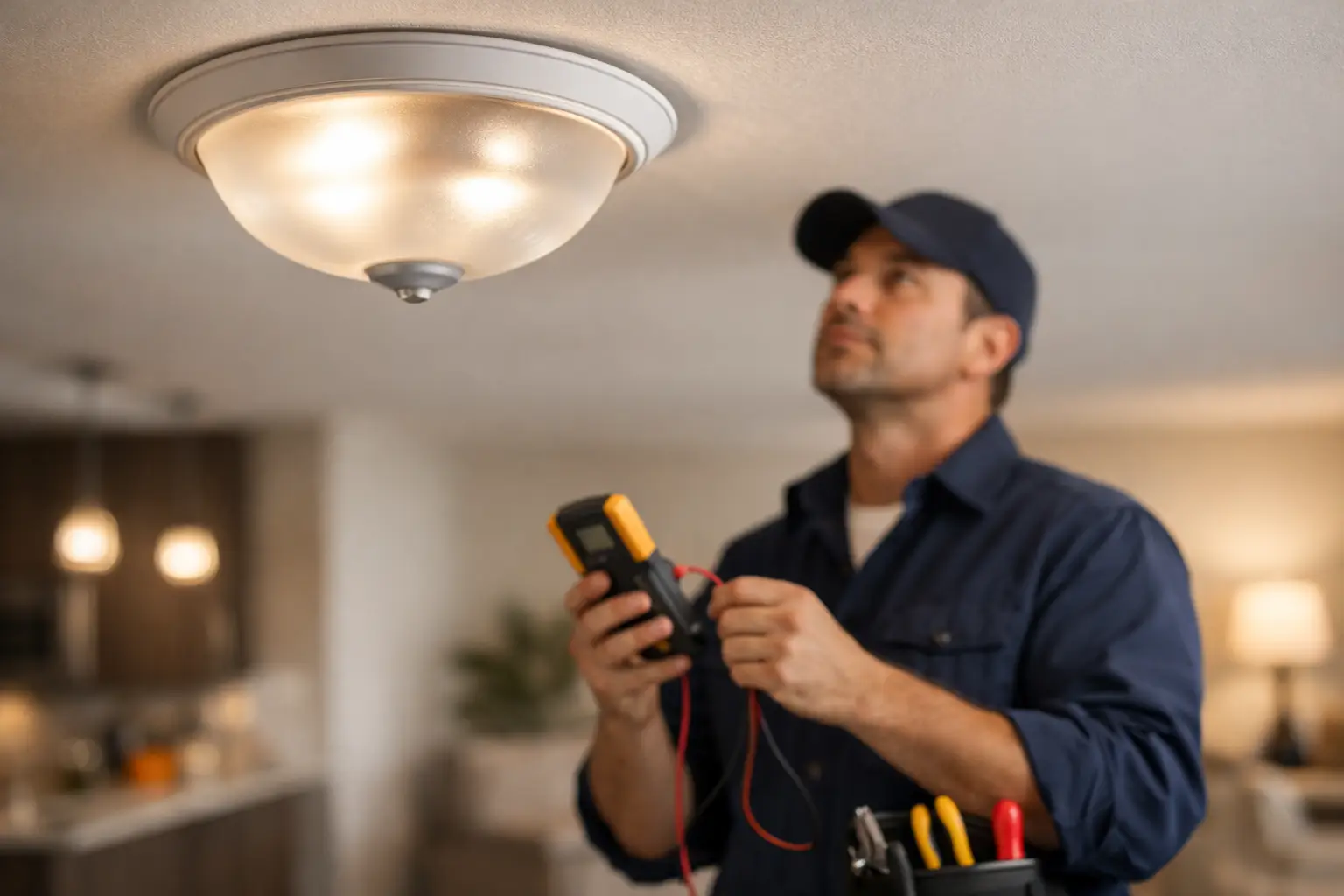
A light that flickers once when you switch it on may be a minor annoyance. A light that dims whenever the microwave starts, buzzes overhead, or flickers in several rooms is different. If you are asking who repairs flickering lights, the answer is usually a qualified electrician, especially when the problem may involve wiring, switches, outlets, or your home’s electrical panel.
You do not need to diagnose the circuit before getting help. Start with what you can see, take a clear photo of the light fixture or affected area, and describe when the flickering happens. That gives the right local pro a better starting point and gets you closer to a safe fix.
Who Repairs Flickering Lights in Your Home?
A licensed electrician is the right professional for persistent, unexplained, or widespread flickering. Electricians troubleshoot the electrical path behind the light: the fixture, bulb socket, wall switch, wiring connections, circuit breaker, and panel. They can identify whether the issue is isolated to one light or points to a larger electrical concern.
For a simple fixture task, such as replacing a loose lampshade or installing a compatible bulb in a working fixture, a handyman may be able to help. But there is a clear trade-off. A handyman can handle many basic home tasks, yet flickering often has an electrical cause that is not visible from the outside. If the source is a loose connection, overloaded circuit, damaged wire, or failing panel component, an electrician is the safer choice.
For renters, the first call may be to your landlord or property manager. Electrical repairs are typically the owner’s responsibility, and they may need to send an approved electrician. Still, document the issue with photos or a short video and report it promptly, particularly if the flickering is new or getting worse.
When an electrician is the clear choice
Call an electrician when flickering affects multiple lights, happens in more than one room, or occurs when a large appliance turns on. You should also choose an electrical pro if a light switch feels warm, a fixture buzzes, breakers trip, outlets stop working, or you notice a burning smell.
Those symptoms do not automatically mean there is an emergency, but they do mean the issue deserves professional attention. Electricity is not a category where guesswork pays off. The goal is not only to make the light stop flickering. It is to find out why it started.
When the issue may be simple
Sometimes the fix is as basic as a loose or incompatible bulb. LED bulbs can flicker when paired with an older dimmer switch that was designed for incandescent bulbs. A bulb that is not fully seated in the socket can also create intermittent flickering.
If the fixture is cool and accessible, turn off the switch first. Then check whether the bulb is secure and whether a known-good bulb changes the result. If the flicker continues, comes back quickly, or affects other lights, stop there and schedule an electrician. Repeatedly tightening bulbs or changing parts will not repair a problem inside the wall.
Why Lights Flicker: The Problem Is Not Always the Bulb
Flickering can be caused by a worn bulb, but it can also reveal a poor connection somewhere in the circuit. A loose connection creates inconsistent power flow. That may show up as flickering, dimming, buzzing, or a light that cuts out when the fixture or switch is touched.
A failing switch, damaged fixture socket, overloaded circuit, or incompatible dimmer can cause similar symptoms. In older homes, aging wiring and electrical components may be part of the equation. In newer homes, recent fixture installation, a loose wire connection, or a high-demand appliance on the same circuit may be the clue.
The timing matters. Does the light flicker only when you run the garbage disposal? Does it start after a storm? Is it limited to one recessed light, or does the whole kitchen dip in brightness? These details help an electrician narrow the cause quickly.
Utility-side voltage issues can also affect lights, though they are less common. If neighbors are experiencing similar electrical problems or the issue affects much of your home at once, an electrician may recommend contacting your utility company after inspecting your system.
What You Can Safely Check Before Booking Help
You can gather useful information without opening a fixture, removing a switch plate, or touching electrical wiring. First, notice whether the flicker is limited to one bulb or one room. Next, pay attention to patterns: when it happens, how long it lasts, and whether another appliance triggers it.
A photo can show the type of fixture, dimmer, bulb, visible discoloration, or a breaker that has tripped. A short video is even more useful for intermittent flickering. This is not about becoming your own electrician. It is about making the service request clear from the start.
Avoid removing electrical covers, working on energized fixtures, or resetting a breaker over and over. If a breaker trips again after one reset, leave it off and arrange for professional service. Breakers are designed to interrupt power when something is wrong. Treat repeated tripping as a signal, not an inconvenience.
Signs Flickering Lights Need Urgent Attention
Turn off power to the affected area if you can do so safely, and seek prompt electrical help when flickering comes with any of these warning signs:
- A burning, smoky, or fishy odor near a light, outlet, switch, or electrical panel
- A warm, hot, discolored, cracked, or buzzing switch, outlet, fixture, or breaker
- Sparks, visible arcing, or a shock or tingling sensation when touching a switch or appliance
- Frequent breaker trips, lights that dim throughout the home, or power loss in several rooms
If you see smoke, flames, or active sparking, move away from the area and contact emergency services. Do not attempt to inspect the source yourself. For less immediate but concerning symptoms, turn off the relevant breaker if you know which one controls the area and wait for a licensed electrician.
How to Get the Right Pro Without Guessing
The challenge with flickering lights is that the visible symptom does not always reveal the trade you need. A flickering pendant light might need a bulb change. It might need a dimmer-compatible LED. Or it might need electrical troubleshooting behind the switch or at the panel.
That is where a photo-first request can save time. With Ono-Fix, you can submit a photo of the fixture, switch, or visible issue to start with a clearer service path. Instead of sorting through categories and trying to describe electrical symptoms with the right terminology, you can be matched with a trusted local pro suited to the job.
When booking, include the room, fixture type, when the issue began, and whether it occurs alongside other symptoms. Mention recent changes, such as a new appliance, light fixture, dimmer, renovation, storm, or breaker trip. Clear details help the electrician arrive prepared and may reduce the need for a second visit.
Questions to Ask the Electrician
A good electrician should explain the likely cause in plain language and tell you what they found before moving ahead with a larger repair. Ask whether the problem is limited to the fixture or switch, whether the circuit is safely sized for the connected load, and whether any parts need replacement.
If the repair involves a panel, new wiring, or adding a circuit, ask whether permits or inspections are required in your area. Requirements vary by location and scope of work. The right professional will not pressure you into unnecessary upgrades, but they also will not ignore a safety issue just because the light still turns on.
A flickering light is your home asking for attention. Take a photo, note the pattern, and let a qualified local electrician turn uncertainty into a safe, lasting repair.