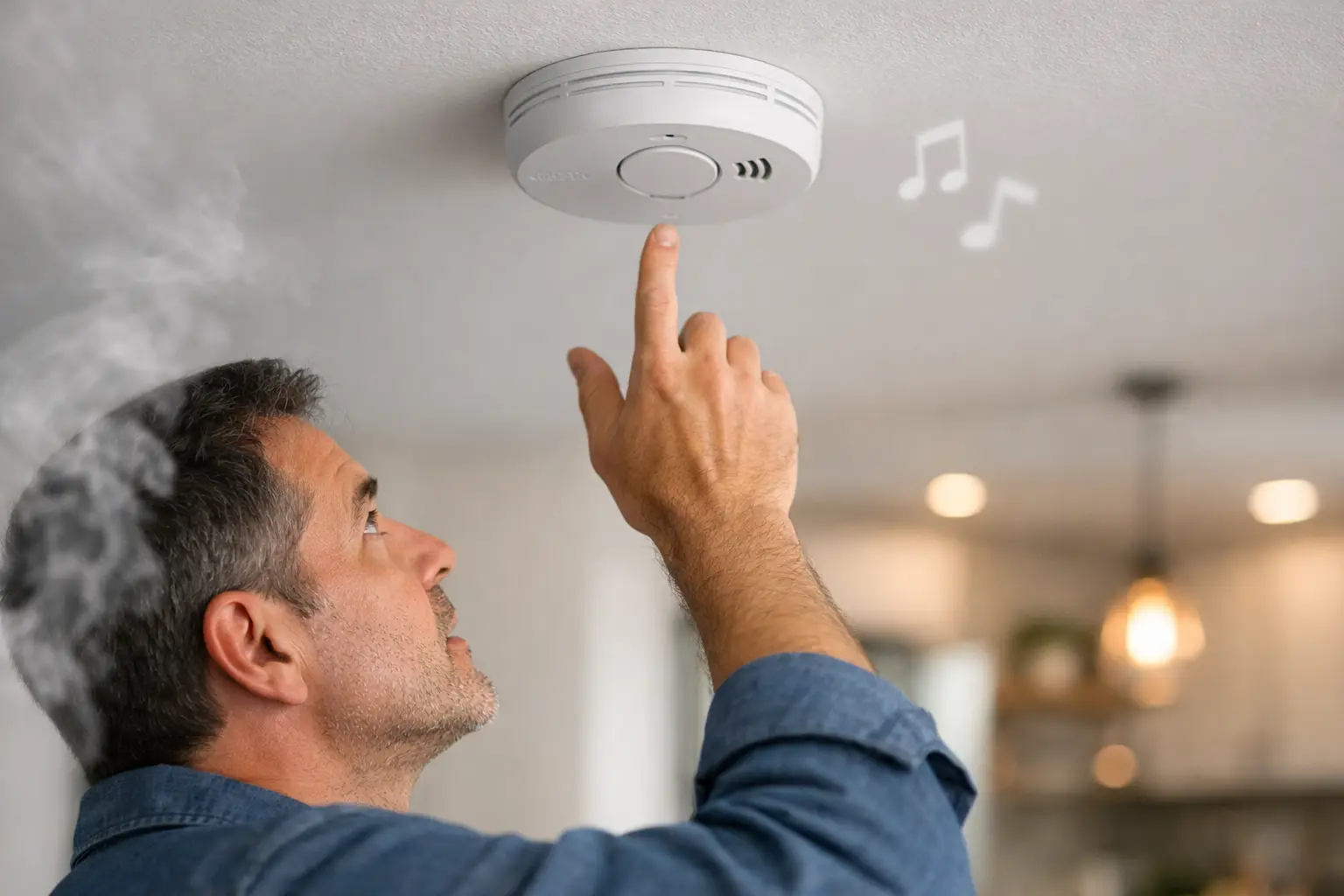
A smoke detector that chirps every 30 to 60 seconds can turn a quiet night into a frustrating mystery. This smoke detector chirping help starts with the safest assumption: a chirp is usually a maintenance warning, but it is never a reason to disable the alarm and move on. Your detector is trying to tell you something. The goal is to identify the message, fix the right issue, and keep your home protected.
A single chirp is different from a full alarm. A loud, repeating alarm may indicate smoke, fire, or carbon monoxide depending on the device. If the alarm is sounding and there is any chance of fire or carbon monoxide exposure, get everyone outside and call emergency services. Do not pause to troubleshoot.
Start With the Basics Before Replacing Anything
First, look at the unit and listen carefully. Is it a smoke alarm, a carbon monoxide alarm, or a combination unit? The label on the back or side should say. Different models use different chirp patterns, so the manufacturer instructions are the best source for what your specific sound means.
Next, make sure the sound is actually coming from the detector you are examining. In homes with interconnected alarms, a chirp from one unit can seem like it is coming from another room. Stand beneath each alarm for a moment, especially units near bedrooms, hallways, garages, laundry areas, and kitchens.
If you rent, check whether your lease requires notifying the property manager before changing a hardwired alarm. You can still replace a standard backup battery if the instructions allow it, but an electrical issue or a failing wired unit may need maintenance approval.
Common Reasons a Smoke Detector Chirps
A weak or incorrectly installed battery
Low battery power is the most common cause. Even hardwired smoke detectors usually have a backup battery for power outages, and that battery can chirp when it runs low. A fresh battery may still cause trouble if it is the wrong type, installed backward, or not seated firmly in its compartment.
Use the battery type listed on the detector label or in its manual. Do not mix old and new batteries, and do not use a rechargeable battery unless the manufacturer specifically approves it. If several alarms began chirping around the same time, replace the batteries in all applicable units rather than chasing one sound at a time.
Some newer alarms have sealed, long-life batteries. If one of these chirps because its battery has reached the end of its service life, the entire detector generally needs replacement. There is no removable battery to swap.
The alarm has reached its replacement date
Smoke alarms do not last forever. Many need replacement after 10 years, while some models have a shorter listed life. Find the manufacture date on the back of the unit. If it is past the replacement date, a new battery will not solve the real problem for long.
This is especially easy to miss after moving into a home. An alarm can look clean and still be older than it should be. Replace it with a compatible model, particularly if your home has interconnected hardwired alarms that need to communicate with each other.
Dust, insects, humidity, or temperature changes
Smoke detectors are sensitive by design. Dust buildup, tiny insects, steam, high humidity, or sudden temperature swings can interfere with the sensing chamber and cause nuisance chirps or false alarms. Units near bathrooms, kitchens, attic access points, laundry rooms, or unconditioned garages are more likely to face these conditions.
Turn off power only if your model instructions require it, then gently vacuum around the exterior vents with a soft brush attachment. Do not spray cleaners, water, compressed air, paint, or fragrance products into the alarm. Those shortcuts can damage the sensor or leave residue behind.
If a detector is too close to a shower, stove, or HVAC vent, the placement may be part of the problem. Moving or replacing a hardwired alarm involves safety codes and electrical connections, so this is a good point to bring in a qualified local electrician.
A reset is needed after a power interruption
A hardwired detector may continue chirping after a power outage, a tripped breaker, battery replacement, or electrical work. In many models, the backup charge needs to be cleared and the alarm reset.
Follow the instructions printed on the unit or in the manual. A typical reset involves installing a fresh battery, securing the alarm fully to its mounting base, then holding the test button for several seconds. Some models require a longer hold. Once reset, press the test button again to confirm the alarm sounds normally.
If it immediately resumes chirping, do not keep pressing buttons or remove the battery to make the noise stop. The issue may be age, wiring, a loose connection, or another linked alarm in the system.
The chirp is coming from a different safety device
Carbon monoxide alarms, security system panels, smart home hubs, sump pump backups, and even appliances can make similar periodic sounds. A carbon monoxide alarm may also signal a low battery or end-of-life warning, but treat any full CO alarm as an emergency.
Check the label before assuming it is a smoke detector issue. If a device is mounted high on a wall or ceiling and you cannot safely inspect it, do not balance on furniture. Use a stable ladder with another adult nearby, or schedule help.
Smoke Detector Chirping Help: A Safe Fix Order
When there is no active fire or carbon monoxide emergency, work through the issue in this order:
- Identify the exact chirping unit and read its label for the sound pattern, battery type, and replacement date.
- Replace the battery with the manufacturer-approved type, or replace the whole unit if it has a sealed battery or is expired.
- Check that the battery drawer, alarm cover, and mounting plate are fully closed and secure.
- Gently clean exterior vents, then reset and test the detector according to its instructions.
- If the chirp continues, inspect other interconnected alarms and arrange professional help for hardwired or uncertain electrical issues.
Do not test a smoke detector with a match, candle, lighter, or actual smoke. The test button is designed for this job. Test alarms monthly, and make sure everyone in the household recognizes the difference between a test sound, a low-battery chirp, and an emergency alarm.
When You Need an Electrician Instead of Another Battery
A battery replacement is a homeowner-friendly task. Electrical diagnosis is different. Call a trusted local electrician when a hardwired unit keeps chirping after a proper battery replacement and reset, when the alarm will not test, or when several interconnected units behave unpredictably.
You should also get help if the detector is loose, has visible discoloration, shows signs of moisture damage, or is connected to wiring you do not recognize. Never work on ceiling wiring with the power on, and do not assume a breaker is off unless you know how to verify it safely.
For property managers, repeated chirps are worth handling quickly. A tenant may silence or remove a device out of frustration, leaving the property less protected. Replacing expired alarms, correcting poor placement, and documenting testing can prevent a small maintenance request from becoming a serious safety gap.
Ono-Fix can help remove the guesswork when the source is visible but unclear. Take a clear photo of the detector, its label, and the installation area. One photo can help identify whether you are looking at a simple replacement, an outdated device, or a job for a trusted local pro.
Keep the Chirping From Returning
Put detector maintenance on the same schedule as other home basics. Test alarms monthly, replace batteries based on the manufacturer guidance, and review manufacture dates at least once a year. Many households choose a memorable annual date, such as daylight saving time, but the calendar reminder matters more than the date itself.
Keep detectors clean, avoid blocking their vents, and replace any unit that has reached the end of its listed lifespan. If you are renovating, painting, or creating significant dust, protect alarms as directed by the manufacturer and restore them promptly afterward.
A chirping detector is disruptive, but it is also useful information. Address it before bedtime, follow the device instructions, and get professional help when the issue points beyond a battery. A quiet home should still be a protected one.