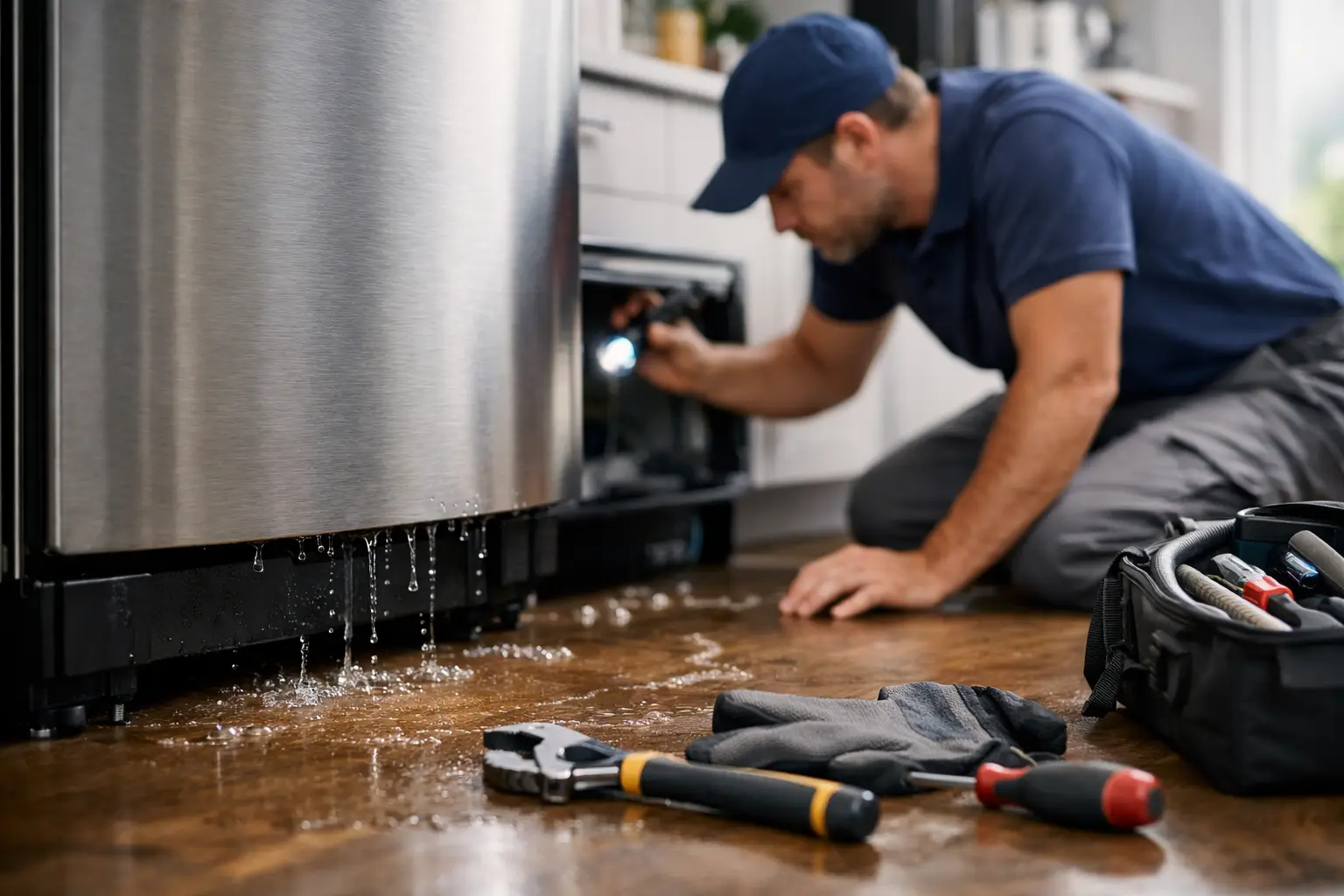
A dishwasher leak rarely starts with a dramatic flood. More often, it begins with a small puddle at the front corner, a damp cabinet floor, or a musty smell that appears after a cycle. Dishwasher leaking repair starts with protecting your kitchen from more water, then finding where the leak is actually coming from. The water you see is not always the water source.
If water is actively spreading, skip the diagnosis for now. Turn off the dishwasher, stop its water supply if you can reach the shutoff valve, and place towels around the base. A few minutes of fast action can protect flooring, cabinets, and the ceiling below an upstairs kitchen.
First, contain the leak safely
Do not keep running a leaking dishwasher to "see if it happens again." That can turn a failed gasket or loose connection into cabinet damage and mold concerns. If water is near an outlet, cord, or hardwired electrical connection, switch off power to the dishwasher at the breaker before touching the area.
Then remove standing water and check the floor around the appliance. Pull the lower rack out and look inside the tub for a utensil, food container, or large piece of debris that may be preventing the door from closing fully. This is one of the few leak causes that can have a quick, simple fix.
Take a few clear photos before drying everything completely. Capture the puddle, the dishwasher door, the lower front panel, and any visible hoses or cabinet damage. A photo gives a service professional useful context and saves you from trying to describe a confusing problem with plumbing terms you should not need to know.
Where is the dishwasher leaking from?
The location of the water offers the best clue. A dishwasher can leak from the door, underneath the machine, at the water supply connection, or from the drain system. Each points to a different repair path.
Water at the front of the door
Water along the front edge usually suggests a door seal problem, an obstruction, or excessive suds. Inspect the rubber gasket that runs around the dishwasher opening. It should sit evenly, without visible tears, hardened sections, food buildup, or a corner pulled away from the channel.
Wipe the gasket with a damp cloth and inspect the bottom edge of the door, where debris often collects. If the seal is cracked or misshapen, it may need replacement. A worn gasket is generally a straightforward repair, but getting the correct part and installing it evenly matters.
Too much foam can also force water out of the door. This often happens when hand dish soap, rather than dishwasher detergent, gets into the machine. Stop the cycle, remove as much foam as possible, and avoid adding more detergent on the next run. If the problem continues with the right detergent, the door seal or dishwasher level may be the real issue.
Water underneath the dishwasher
A puddle centered under the appliance may come from a loose hose clamp, a failing inlet valve, a damaged pump seal, or a cracked component below the tub. These parts are harder to inspect because most are behind the kick plate or underneath the unit.
You may be able to remove the lower access panel with the power off and look for obvious moisture, mineral deposits, or a drip trail. Do not disconnect hoses or pull a built-in dishwasher out of its opening without care. The drain line, water line, power connection, and countertop mounting brackets can all be affected, especially in older installations.
A leak that appears only during draining often points toward the drain hose, drain pump, or connection to the garbage disposal or sink drain. A leak that begins when the dishwasher first fills is more likely related to the incoming water line or inlet valve. That timing is valuable information for the repair visit.
Water near the sink cabinet
If the puddle is under the sink rather than directly under the dishwasher, check the drain hose connection and the garbage disposal inlet. A loose clamp, split hose, or poor connection can leak only when the dishwasher drains, making it easy to mistake for a dishwasher body leak.
New garbage disposal installations deserve special attention. If the dishwasher drain connection was not properly opened during installation, the dishwasher may fail to drain and overflow. This repair is small, but the diagnosis needs to be right. Forcing another cycle through a blocked drain setup can create a much bigger mess.
Water from the sides or back
Side or rear leaks may be caused by a water supply line, drain hose, damaged tub, or an issue with how the dishwasher sits in the cabinet opening. A dishwasher that is not level can send water toward one side of the door rather than allowing it to remain contained inside the tub.
Leveling is not always a DIY adjustment. Moving the unit can strain the water connection or scratch flooring, and a leak from the back often requires access that built-in cabinetry makes difficult. This is a good point to bring in help rather than guessing.
Common causes that need professional repair
Some dishwasher leaks have an obvious culprit. Others only show up at a specific moment in the wash cycle, which is why replacing parts at random can waste time and money. A trusted local pro can inspect the machine, confirm the source, and tell you whether repair makes sense for its age and condition.
Professional help is especially useful for these issues:
- A cracked tub, damaged pump, failed inlet valve, or leaking internal seal.
- A water line or drain hose connection that needs to be replaced or rerouted.
- A dishwasher that leaks after being moved, installed, or connected to a new garbage disposal.
- Repeat leaks that return after cleaning the gasket and checking for door obstructions.
- Water damage to cabinets, flooring, baseboards, or the ceiling below the kitchen.
There is a trade-off between a small repair and replacement. A new gasket or hose can be worth fixing on an otherwise dependable dishwasher. But a major internal leak on an older machine may cost enough that replacement becomes the smarter call. A qualified pro can give you a clear recommendation based on the specific failure, not a generic rule.
What to tell the repair professional
You do not need to identify the exact broken part. Clear observations are more useful than technical guesses. Mention whether the leak happens during filling, washing, draining, or after the cycle ends. Note where the water first appears and whether the dishwasher was recently installed, moved, or serviced.
Photos help here. With Ono-Fix, you can start with a photo of the visible issue instead of sorting through unfamiliar repair categories. The goal is simple: identify the likely problem, match with the right trusted local pro, and get a path forward without a long phone explanation.
If the dishwasher has leaked more than once, also mention any signs of damage around it. Soft cabinet panels, warped flooring, peeling finish, staining, or a lingering odor may mean the job includes more than the appliance itself. Catching that early can prevent a small leak from becoming a larger restoration project.
Avoid these quick fixes
Do not use tape, sealant, or caulk as a permanent answer for a leaking hose, door gasket, or dishwasher tub. Water pressure, heat, detergent, and repeated door movement quickly expose temporary patches. They can also hide the source long enough for water to damage the space behind the appliance.
Avoid overtightening fittings, too. A connection that looks loose may have a worn washer or a cracked fitting, and extra force can make either problem worse. If you are not certain what the connection serves, stop there.
A dry kitchen floor is the immediate goal. A correctly repaired dishwasher is the lasting one. Take the leak seriously, document what you see, and let the right local professional turn a confusing puddle into a clear fix.