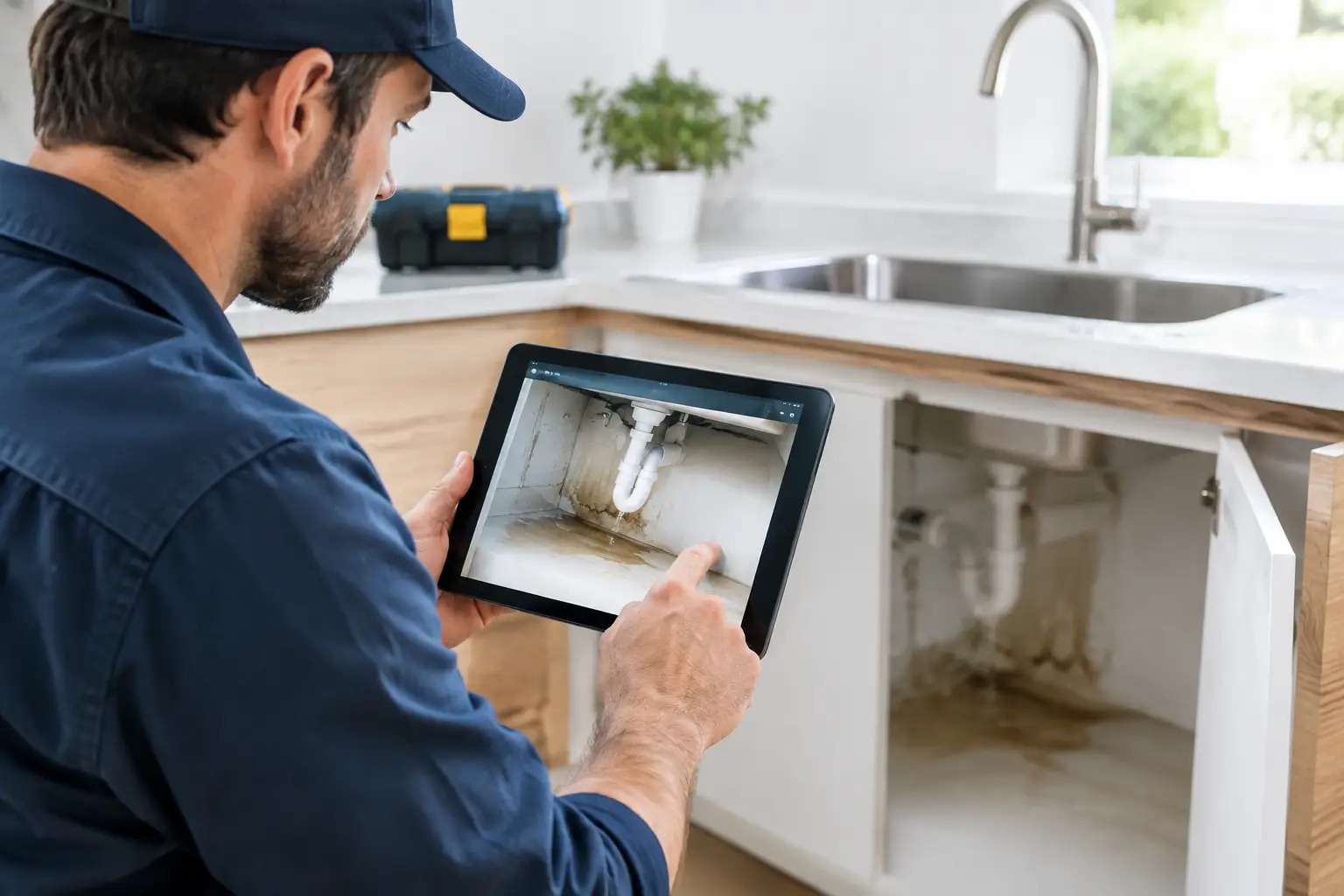
A drip beneath the kitchen sink does not arrive with a label. Neither does a flickering outlet, a stain spreading across the ceiling, or a washing machine that suddenly stops draining. For most people, the hard part is not booking help. It is knowing what kind of help to book. Visual diagnosis adoption is changing that first, frustrating step by letting a photo guide the service path.
Instead of asking a homeowner to decide whether a problem needs a plumber, electrician, handyman, cleaner, or appliance technician, photo-first service tools start with what people can actually see. Take a picture. Show the issue. Get clearer direction. That simple shift reduces guesswork before the search even begins.
Why visual diagnosis adoption matters at home
Home-service booking has traditionally depended on the customer describing a problem in trade language they may not know. A person might call about a "pipe issue" when the source is a loose supply line. They may select handyman for a failed outlet because the electrical issue feels small. Or they might delay a request altogether because they cannot tell whether a wall stain is old, cosmetic, or an active leak.
That uncertainty costs time. It can lead to the wrong appointment, a vague service request, or no action until the issue gets worse. A photo cannot replace an in-person inspection, but it gives the intake process useful context immediately. A visible symptom often says more than a rushed description entered into a small form field.
For busy households, the appeal is straightforward. You do not need to learn repair terminology before you ask for help. You do not need to scroll through a directory and hope you picked the right category. You start with the problem in front of you.
This matters especially for renters, first-time homeowners, and property managers handling several units. Their challenge is not always finding a provider. It is creating an accurate request fast enough for the right provider to respond.
A photo changes the first question
Traditional service marketplaces begin with, "What service do you need?" Visual diagnosis begins with a better question: "What are you seeing?"
That difference sounds small, but it changes the customer experience. The first question no longer assumes the customer understands the cause of the issue. It only asks them to document what is visible. A leaking valve, cracked tile, damaged cabinet hinge, clogged drain, loose light fixture, or furniture box can become the starting point for useful routing.
AI can assess visible cues and direct the request toward an appropriate service category. That does not mean a photo delivers a final repair diagnosis in every case. Many household problems have hidden causes. Water damage may come from plumbing, roofing, condensation, or an appliance. A tripped breaker may be a simple reset or a warning that needs a licensed electrician.
The value is in narrowing the path, not pretending uncertainty does not exist. Good visual intake helps identify the likely next step and sends the homeowner to a qualified local professional who can confirm the problem safely.
Where photo-first service works best
Visual diagnosis is most useful when the issue has clear, visible evidence and the customer needs category guidance. Common examples include a stain or active leak, damaged drywall, a broken fixture, an outlet or switch concern, a clogged or slow drain, furniture that needs assembly, or a room that needs cleaning after a move or repair.
It also helps with jobs that are easy to underestimate. A cabinet door that will not close may be a hinge adjustment. It may also be warped wood caused by moisture. A photo gives the service platform a starting signal and gives the professional more context before arrival.
Some situations require immediate escalation rather than routine matching. If there is a gas smell, smoke, sparking, a burning odor, major flooding, a downed power line, or a medical emergency, contact the appropriate emergency service or utility provider first. A photo-based tool is designed to simplify everyday service intake, not replace emergency response.
Better photos lead to better matches
The technology can only work with what it can see. You do not need professional-quality images, but a few simple choices can make a service request much clearer.
- Take one wider photo to show where the problem is located, then a closer photo of the damaged or malfunctioning area.
- Use good lighting when possible. Turn on room lights or use a flashlight without placing yourself near an electrical or water hazard.
- Include helpful context, such as the pipe beneath the sink, the appliance panel, or the surrounding wall or floor.
- Add a short note about what changed: when it started, whether it is getting worse, and whether there is leaking, heat, noise, or loss of power.
- Do not move damaged wiring, remove electrical panels, climb onto a roof, or touch standing water to get a better picture.
These details support a faster, more accurate handoff. They also help a local pro arrive better prepared, whether that means bringing the right parts, allowing enough time, or recognizing that the job needs a different specialist.
Trust is the real adoption test
People do not adopt visual diagnosis just because AI is involved. They adopt it when it removes effort without creating new doubt.
A homeowner needs to know what happens after they upload an image. Will it suggest a service category? Will it explain why? Can they add a note if the image does not tell the whole story? Will they be connected to a trusted local pro with the right skills? Clear answers build confidence.
Privacy matters, too. Household photos may show personal belongings, family spaces, addresses, or sensitive details. Customers should have the ability to submit only what is necessary, avoid capturing people or private documents, and understand how their information is handled. Helpful technology should feel like an assistant, not an intrusion.
Accuracy should be communicated with the same care. Visual tools can identify patterns and likely service needs, but they should not overpromise. The right experience makes room for professional confirmation. It treats the photo as a better beginning, not a substitute for licensed judgment where licensed work is required.
Visual diagnosis adoption makes service feel less technical
The biggest benefit is not a technical feature. It is relief.
When something breaks at home, people often feel pressure to explain it correctly before anyone will help. They search terms they do not understand, compare categories they cannot confidently distinguish, and worry about wasting money on the wrong call. Visual diagnosis removes some of that burden.
Ono-Fix applies this idea to the moment homeowners need it most: take a photo of the issue, get a clearer service direction, and move toward the right local help. One Photo. One Solution. The promise is not that every household issue is simple. It is that getting started can be.
That is why this shift has staying power. It meets people where they are: standing in front of a problem, phone in hand, short on time, and looking for a reliable next move.
The next time a household issue leaves you wondering who to call, do not let uncertainty slow the repair. Capture what you can see, share the key details, and let a clearer service path begin with the evidence already in front of you.