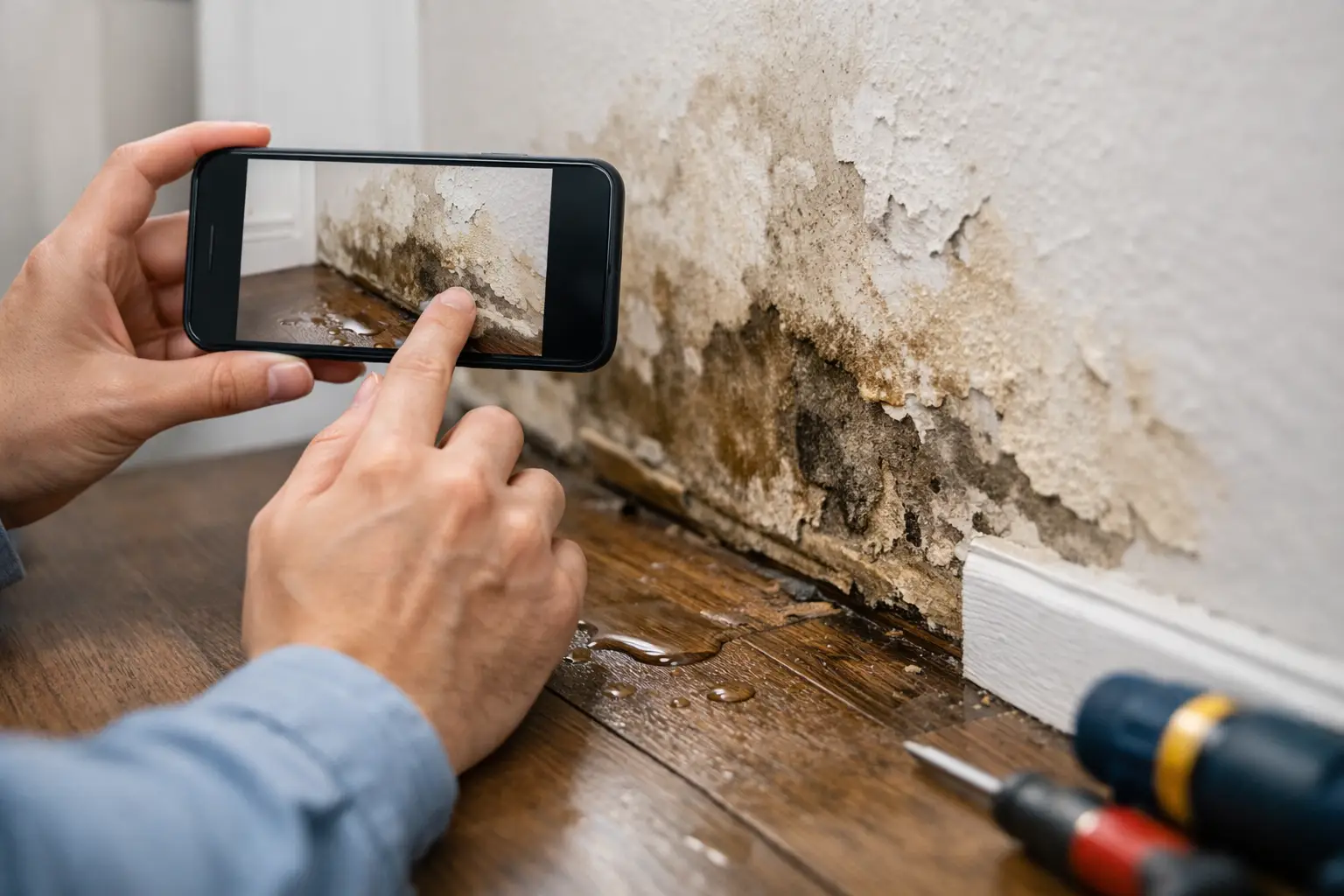
A brown ring on the ceiling can look small from across the room. Behind it, there may be a slow roof leak, a sweating pipe, or water that has already traveled farther than the stain suggests. So, can photos identify water damage? Often, yes - at least well enough to recognize a likely issue and take the right next step. A photo is not a moisture meter or an on-site inspection, but it can turn a confusing home problem into a clear service path.
Can Photos Identify Water Damage Accurately?
Photos can reveal visible signs that are strongly associated with water damage: discoloration, peeling paint, swollen materials, warped flooring, bubbling drywall, and mold-like growth. They can also provide useful context. A stain directly below a bathroom, for example, points to a different set of likely causes than a stain near an exterior wall after heavy rain.
What a photo cannot do is confirm the full source, depth, or extent of the moisture. Water rarely stays where it first appears. It can move along pipes, floor joists, insulation, and drywall before becoming visible somewhere else. That is why a photo should be treated as a fast starting point for identifying the kind of help you need, not as final proof that the problem is minor.
Visual assessment is especially useful when you are unsure whether to call a plumber, roofer, restoration specialist, or general repair professional. The goal is simple: spot the clues, document them clearly, and get the issue routed to the right trusted local pro before the damage grows.
What pictures can show well
Certain water-related problems leave distinct visual patterns. Ceiling stains often appear yellow, tan, or brown and may have a darker outline around the edge. Fresh leaks can leave drywall soft, sagging, or visibly wet. On walls, paint may bubble, crack, or peel as moisture pushes it away from the surface.
Flooring tells its own story. Wood planks may cup, buckle, or separate at the seams. Laminate can swell at the edges, while vinyl flooring may lift or loosen. Around windows, doors, and baseboards, look for stains, swollen trim, crumbling material, or paint that no longer sits flat.
Photos can also show the condition of a visible plumbing connection. A corroded shutoff valve, dripping supply line, wet cabinet bottom, or water pooled near a water heater is useful evidence. These details help distinguish an active plumbing issue from old staining that may be dry today.
What pictures cannot confirm
A picture cannot reliably tell you whether a stain is old or active. It cannot measure moisture inside a wall, identify hidden mold, or prove that a floor is structurally sound. Even visible mold-like spotting needs care: dark marks may be mildew, dirt, smoke residue, or a different surface issue entirely.
The cause can also be misleading. A wet ceiling beneath a bathroom may come from a leaking drain, a failed shower pan, a supply-line leak, or condensation from an uninsulated pipe. A pro may need to test moisture levels, inspect nearby fixtures, and trace the water's path before recommending a repair.
That uncertainty is not a reason to wait. It is a reason to use a photo as the first signal, then match the problem with appropriate help.
Signs of Water Damage to Photograph
Start with the most obvious affected area, but do not stop there. Take a wide photo that shows where the damage sits in the room, then a close-up that captures the texture and color. If you can safely do so, photograph nearby plumbing fixtures, appliances, windows, roof access points, or exterior walls that may be related.
The most useful photos usually show one or more of these clues:
- Brown, yellow, or gray stains on ceilings, walls, or trim
- Bubbling, peeling, cracked, or blistered paint
- Soft, sagging, swollen, or crumbling drywall
- Buckled wood, lifted vinyl, swollen laminate, or loose tile
- Wet cabinet interiors, rusted fittings, dripping pipes, or puddles
- Dark speckling, fuzzy growth, or recurring discoloration near moisture
Include a familiar object for scale when it helps, such as a tape measure or a standard sheet of paper. Avoid placing anything on a wet electrical area or beneath a sagging ceiling. A wide shot may show the relationship between a stain and a light fixture, window, or shower. That context can matter as much as the close-up.
If the mark changes after rain, after running the shower, or after using an appliance, take a photo each time. A simple sequence can show whether the issue is active and what triggers it. For a property manager or a repair professional, that is far more useful than trying to describe a changing stain from memory.
Get the lighting right
Natural light is helpful, but indirect indoor lighting often works better for ceiling and wall stains. Turn on the room lights and avoid using a flash directly against glossy paint, which can hide texture. Take the photo straight on, then from a slight side angle. Side lighting can make bubbling paint, wall ripples, and floor warping easier to see.
Do not edit the images or apply filters. Accurate color and texture help with a quicker initial assessment. If your phone has a timestamp, keep it available, especially if the damage is spreading or you may need to document the issue for a landlord or insurer.
When a Photo Means You Need Fast Help
Some situations call for immediate action, not more investigation. If water is actively pouring from a pipe, ceiling, appliance, or wall, shut off the closest safe water supply if you know how. If you cannot isolate the source, use the main water shutoff. Move valuables away from the area and use towels or a container only when it is safe to do so.
Keep clear of standing water near outlets, extension cords, light fixtures, or electrical panels. Do not touch a wet ceiling that is bulging or sagging. Water and electricity are a dangerous combination, and a saturated ceiling can collapse without much warning. In those cases, contact emergency services if there is an immediate safety risk, then arrange professional help.
You should also act promptly when a photo shows fresh staining that expands, flooring that is lifting, mold-like growth, a wet area around a water heater, or damage following a storm. Even a small leak can feed mold, weaken materials, and increase repair costs when left alone.
The trade-off is that not every old-looking stain requires emergency restoration. A dry, unchanged mark may be evidence of a past issue that was repaired. Still, it deserves a closer look if you do not know its history. A professional can help determine whether the area is dry, whether the source was actually fixed, and whether repair is needed to prevent a repeat.
From Photo to the Right Home Service
Most homeowners do not need to diagnose the exact failure before asking for help. They need to know what the photo suggests and which professional should take it from there. That is where visual intake saves time.
A visible drip under a sink may point to a plumber. Water marks around a skylight or exterior ceiling corner may require roofing or exterior repair expertise. Flooding from a failed appliance, a burst pipe, or widespread wet materials may call for water mitigation and restoration. Damaged drywall, trim, or flooring may need repair after the source of moisture has been stopped.
Sometimes more than one service is necessary. A plumber may stop the leak, then a restoration or repair professional may dry, inspect, and rebuild the affected area. Trying to choose every trade upfront can slow down the first step. Start with clear evidence of the problem and let the service path follow the likely cause.
Ono-Fix is built for that moment of uncertainty. Submit a clear photo of the issue, get help identifying what you are seeing, and move toward the appropriate trusted local professional without having to become a water-damage expert first.
A Better First Move Than Waiting
Water damage is rarely improved by observation alone. Take photos as soon as you notice the stain, puddle, warped floor, or peeling paint. Capture the room context, the close-up details, and any nearby source you can safely see. Then take action based on the risk in front of you.
One photo may not reveal every hidden problem. It can still replace guesswork with a practical next step - and that can make all the difference before a small sign turns into a bigger repair.