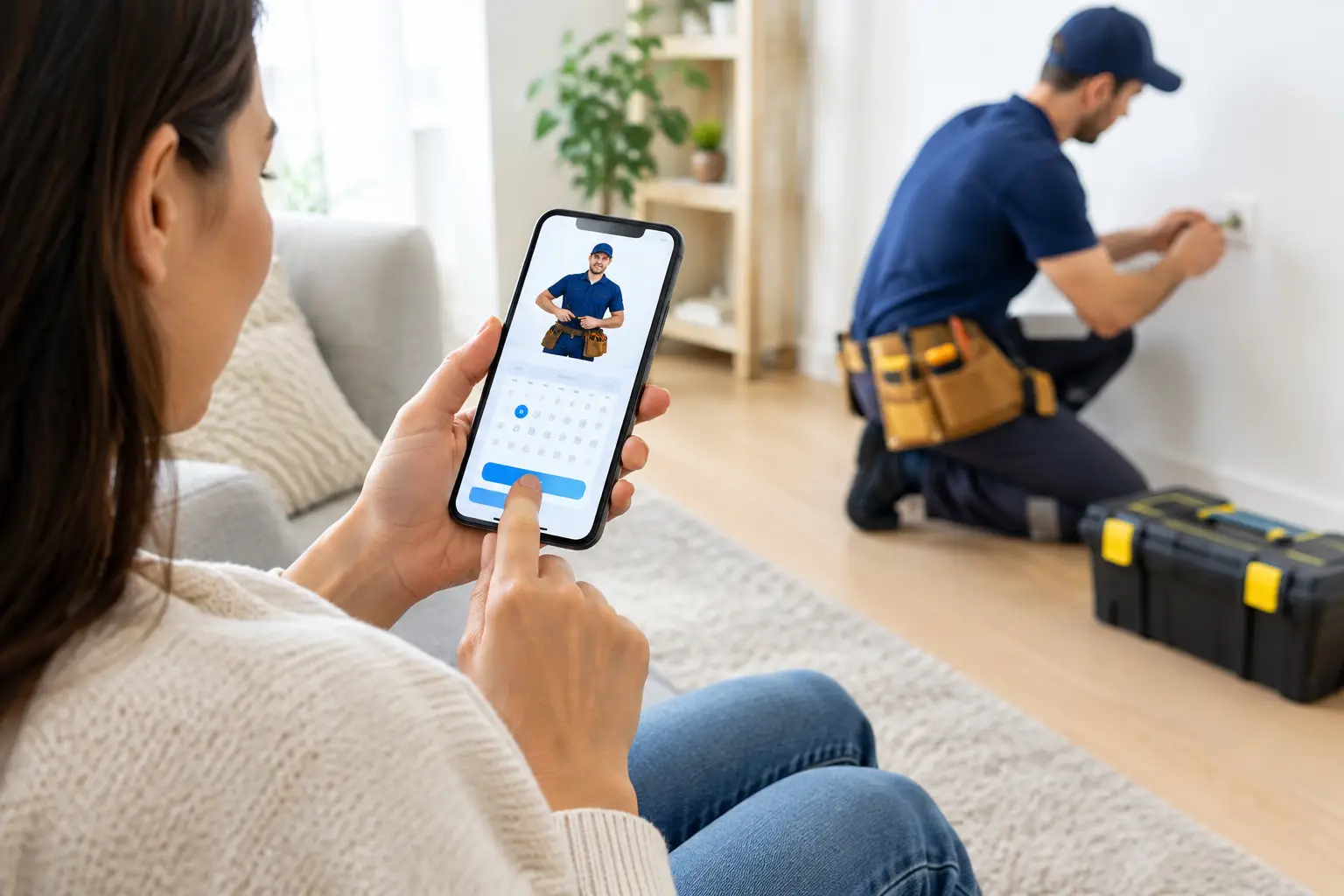
A cabinet door is hanging crooked. A ceiling fan has started wobbling. A bathroom faucet will not stop dripping. The problem is visible, but the right next step is not always obvious. When you need to book a handyman online, the hardest part is often figuring out what to call the problem - and who should handle it.
You should not have to become a home-repair expert before asking for help. A better booking experience starts with what you can see: the loose hinge, cracked caulk, damaged drywall, or furniture still sitting in its shipping boxes. From there, you need a clear path to the right trusted local pro.
Why online handyman booking can feel harder than it should
Most household jobs do not arrive with a neat label. A slow drain might be a simple clog, a worn drain stopper, or a plumbing issue further down the line. A flickering light could be a loose bulb, a failing fixture, or an electrical concern that needs a licensed electrician.
Traditional booking forms often put the burden on you. Choose a category. Describe the issue. Estimate the scope. Decide whether it is urgent. Those questions can be frustrating when all you know is that something in your home is not working as it should.
That uncertainty creates two common problems. Some people delay a small repair until it becomes a larger one. Others book the wrong type of service and lose time explaining the issue again, rescheduling, or waiting for a different professional.
Online booking should remove that friction, not add to it. The goal is not to make you fluent in repair terminology. The goal is to get the right help to your door with less guesswork.
Book a handyman online by starting with a photo
A photo captures details that are difficult to describe in a form or over the phone. It shows where the issue is, what materials are involved, the condition of the surrounding area, and whether a job looks straightforward or may need a more specialized trade.
That is why a photo-first process is so useful. Take a clear picture of the problem, submit it, and let the service platform help identify the most appropriate path. Instead of wondering whether you need a handyman, plumber, electrician, cleaner, or assembly technician, you begin with the evidence already in front of you.
Ono-Fix is built around that simple idea: One Photo. One Solution. Its AI-powered intake helps turn a visible household issue into a more confident service request, then connects you with a trusted local professional suited to the job.
A photo does not replace an on-site assessment. Some issues only reveal their full scope once a pro inspects them in person. But it can make the first step much clearer and help set better expectations before the appointment is scheduled.
Take a photo that helps the pro understand the job
You do not need professional-quality images. You do need a photo that makes the issue easy to see. Use good lighting when possible and take one wider shot for context, followed by a closer image of the damaged or malfunctioning area.
For example, if a cabinet hinge has pulled away, include the full cabinet door and a close-up of the hinge and screw holes. For a wall repair, show both the damage and the surrounding wall. If you are concerned about a leak, photograph the visible water source, any staining, and the area beneath it if that is safe to do.
Avoid moving damaged electrical components, standing water, exposed wires, or anything that could create a safety risk just to get a better picture. When a situation looks dangerous, turn off power or water only if you can do so safely and seek urgent professional help.
Add the details a photo cannot show
A few short notes can make a booking more accurate. Share when the issue started, whether it is getting worse, and what happens when you use the item. Mention relevant details such as apartment access, parking limits, pets, or whether you already have replacement parts on hand.
Keep it simple. “Kitchen drawer will not stay on its track and falls out when opened” is more useful than trying to diagnose the hardware yourself. Clear symptoms help the professional arrive better prepared.
Know when a handyman is the right fit
Handymen are often a smart choice for smaller repairs, installations, maintenance tasks, and projects that do not require a specialized license. Common examples include furniture assembly, hanging shelves or TVs, repairing doors, replacing hardware, fixing minor drywall damage, mounting curtains, and tackling small home updates.
The best fit depends on the job and local requirements. A handyman may be ideal for replacing a loose cabinet handle, but a gas smell, a sparking outlet, or a significant leak needs the appropriate licensed professional right away. This is not about making a task sound more complicated than it is. It is about matching the risk and skill level to the person doing the work.
A reliable booking flow should help route those distinctions early. If your photo suggests an electrical, plumbing, or safety-related issue, the right answer may not be a general handyman at all. That is a good outcome. Getting the correct category from the start protects your home, your time, and your budget.
What to look for before confirming an appointment
Convenience matters, but confidence matters too. Before you confirm, make sure the scope of the request reflects what you need done. If the task involves multiple rooms or several separate repairs, include them upfront. A professional can better plan the visit when they know whether they are assembling one dresser or handling a dresser, wall mount, door adjustment, and two curtain rods.
You should also understand what is included in the appointment. Some jobs can be completed in a single visit. Others may require parts, a return trip, or approval for additional work once the pro sees the issue in person. Asking for clarity is not being difficult. It is how you avoid surprises.
For larger or less-defined projects, photos provide a starting point, not a final diagnosis. A trusted local pro may recommend an inspection before giving a complete scope. That can feel like an extra step, but it is often the honest choice when hidden damage, structural concerns, or code requirements may be involved.
Make the appointment easier for everyone
Once you have booked, small preparations can help the visit go smoothly. Clear a path to the work area and move fragile items out of the way. If the repair is under a sink or behind furniture, provide access before the pro arrives. Keep pets in a separate room if they may be anxious around visitors.
If you bought a fixture, shelf, appliance accessory, or piece of furniture for installation, confirm that all boxes and instructions are available. It also helps to save receipts and product details. The exact model can affect tools, mounting requirements, compatibility, and whether additional supplies are needed.
Be ready to point out the issue and explain the symptoms once in person. Even with a strong photo, you are the person who has lived with the problem. You may know that the door sticks only when it rains, the outlet buzzes only with one appliance, or the leak appears after the dishwasher runs. Those details matter.
The real benefit is less decision fatigue
Home maintenance has a way of piling up. One loose towel bar becomes a list: the closet door needs adjusting, the smoke detector battery is chirping, and the new desk still needs to be assembled. The work itself may be manageable. Deciding how to arrange it all is what drains your time.
A smarter way to book a handyman online reduces the mental load at the beginning. Start with the problem you can see. Let the booking process help identify the service you need. Then move forward with a trusted local pro who can turn a lingering household task into a finished one.
Your home does not need perfect terminology. It needs the right help, at the right time, starting with a photo.