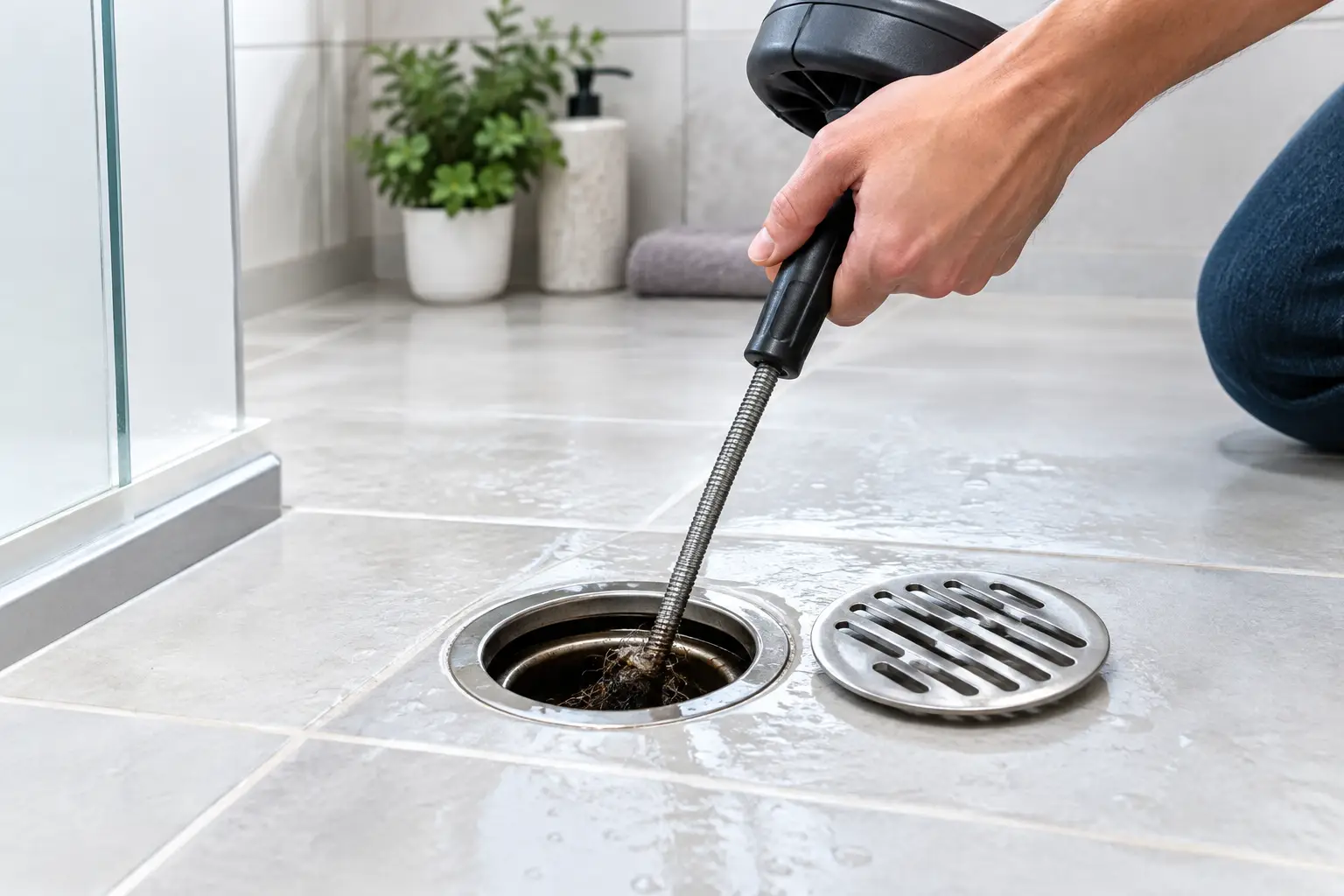
A shower that fills around your ankles turns a normal morning into a cleanup job. If you need clogged shower drain help, start with the visible clues: standing water, slow drainage, hair at the cover, or a sour smell. Those details can point to a simple hair blockage, soap buildup, or a deeper plumbing issue that needs a trusted local pro.
Start With the Safest Fixes
Most shower clogs form close to the drain opening. Hair catches on the drain cover or stopper, then soap residue, shampoo, body oil, and mineral deposits build around it. The result is a blockage that often starts as a slow drain before becoming a pool of water at your feet.
First, stop running the shower. Giving water more time to drain will not clear the clog, and an overflowing shower can damage floors, ceilings, and nearby walls. Remove any loose hair and residue you can see at the drain cover. Put on gloves, lift the cover if it is designed to come off easily, and use a flashlight to look inside.
A plastic drain tool can pull out hair caught near the surface. Insert it gently, move it slowly, and pull straight up. You may remove more buildup than expected. Clean the tool and repeat once or twice if the drain begins to improve.
If the drain is only moving slowly, hot tap water can help loosen light soap residue. Use hot water from the faucet, not boiling water from a pot. Boiling water can damage some pipes, seals, and finishes, especially in older homes or showers with plastic plumbing components.
Skip the Chemical Guesswork
Liquid chemical drain cleaners can look like the fastest answer, but they come with real trade-offs. Strong formulas may damage aging pipes, harm certain finishes, create hazardous splashes, and make the next repair more dangerous for anyone opening the drain. They also may not touch a hair-heavy clog.
Do not mix drain products, bleach, vinegar, or other cleaners. Do not add another product if the first one fails. If chemicals are already sitting in the drain, tell the professional before they begin work. That one detail helps them work safely.
When a Simple Shower Clog Is Not So Simple
A surface clog is common, but it is not the only possibility. The location of the blockage matters. If water is still standing after you remove visible hair, the clog may be farther down the line. If multiple fixtures are draining slowly, the issue may involve a shared branch line or the main sewer line rather than the shower itself.
Watch for these signs that it is time to stop experimenting and get help:
- Water backs up into the shower when a toilet flushes or a bathroom sink runs.
- The shower drain gurgles, smells like sewage, or repeatedly clogs soon after cleaning.
- Water is leaking around the shower base, through the ceiling below, or into an adjacent room.
- You live in an apartment, condo, or managed property where plumbing lines may be shared.
A recurring clog deserves attention even if it eventually clears. Repeated buildup can signal a problem in the pipe, a poorly draining line, heavy mineral scale, or an obstruction that a small plastic tool cannot reach. Waiting can turn a manageable plumbing visit into water damage and a more disruptive repair.
What You Can Photograph for Faster Clogged Shower Drain Help
You do not need to know whether the issue calls for a plumber, drain specialist, or building maintenance team. A clear photo can make the first step easier. Take a well-lit picture of the drain cover, the standing water level if present, and any visible buildup. If there is staining, water outside the shower, or a damaged cover, include that too.
For the most useful image, turn on the bathroom light and keep the camera steady. Photograph the drain from directly above, then take a wider shot that shows the shower floor and nearby areas. Avoid putting your hands into standing water if you have used chemical cleaner or if there is any chance of an electrical hazard nearby.
Ono-Fix uses a photo-first approach to help turn a visible home problem into a clear service path. Submit a photo of the drain issue, describe what happens when you run the water, and get matched with the appropriate trusted local professional. One Photo. One Solution.
What a Plumbing Pro May Check
A qualified professional can do more than pull out a clump of hair. They can assess how quickly the line drains, inspect accessible components, and determine whether the blockage is close to the shower or deeper in the system. The right method depends on the pipe material, the age of the home, the layout of the bathroom, and whether other drains are affected.
For a localized clog, a professional may use a drain auger or another mechanical tool to remove buildup without relying on harsh chemicals. For persistent or deeper obstructions, they may recommend more advanced cleaning or inspection. The goal is not simply to make the water disappear today. It is to identify why the drain stopped working and reduce the chance of another backup next week.
If you rent, report a recurring or severe clog promptly. Do not remove plumbing parts that are difficult to access, and do not force a tool down the drain. A damaged pipe or loose connection behind a wall can create a larger maintenance issue. Property managers should also treat repeated reports from one bathroom as useful data, especially in older buildings with shared plumbing runs.
Keep the Shower Drain Clear After the Fix
Once the water is flowing normally, prevention is straightforward. Use a drain screen that catches hair before it enters the pipe, and empty it regularly instead of letting it become packed down. Wipe visible soap residue from the shower floor and cover during routine cleaning.
Households with long hair, pets that are bathed in the shower, or hard water may need more frequent maintenance. There is no single schedule that works for every home. The practical rule is to act at the first sign of slow drainage, not after the shower begins to flood.
Avoid flushing heavy grooming products, thick scrubs, cotton swabs, dental floss, or other non-water-soluble material down the drain. Even items that seem small can catch on existing buildup and start a new clog.
A clogged shower drain is frustrating because the cause is usually hidden. You do not need to diagnose the pipework alone. Start with the safe visible steps, take a clear photo when the problem persists, and get the right help before a slow drain becomes water where it does not belong.