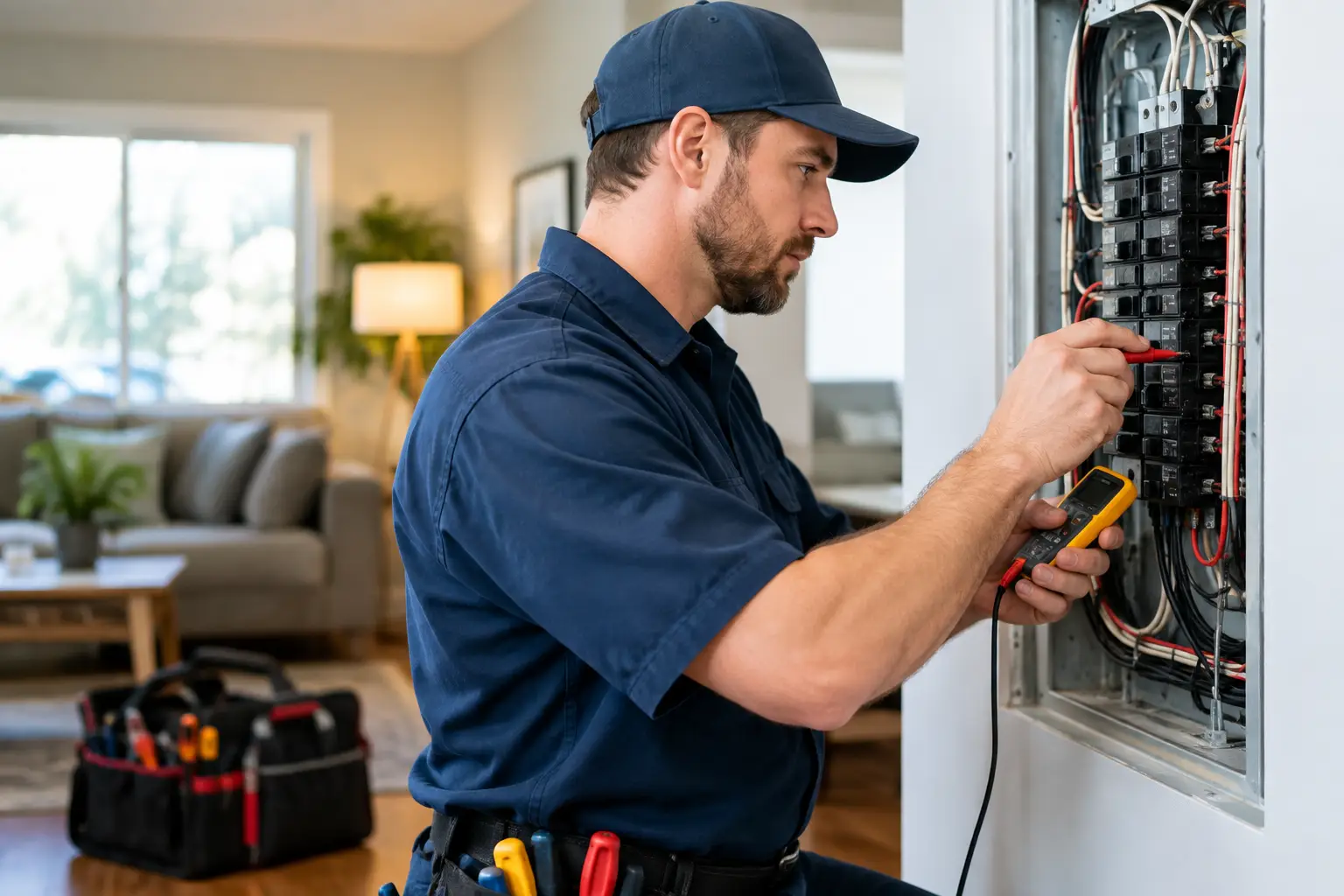
A burning smell near an outlet is not a wait-until-Monday problem. Neither is a breaker that keeps tripping, a panel that feels warm, or a light fixture that suddenly starts sparking. When something electrical changes fast, an emergency electrician service can protect your home, your equipment, and the people inside it.
The hard part is knowing what counts as urgent. You should not have to decode electrical symptoms, guess which trade to call, or try to describe a strange outlet over the phone. Start with safety. Then get the right local professional involved.
What Counts as an Electrical Emergency?
An electrical emergency is any issue that creates a realistic risk of fire, shock, smoke, or loss of power to an essential part of your home. It does not always look dramatic. A faint buzzing sound, a hot wall plate, or a breaker that will not stay on can be an early warning sign.
Call emergency services first if there is an active fire, visible smoke, an electrical shock with injury, or a downed power line. Stay away from the area. Do not touch the line, standing water, metal fences, or anything in contact with it. For power lines or neighborhood outages, your utility company may need to respond before an electrician can make repairs.
For urgent issues inside the home, an emergency electrician can identify the source, isolate the hazard, and make a safe repair. Common reasons to seek immediate help include:
- Sparks, smoke, crackling, or a burning-plastic smell from outlets, switches, fixtures, appliances, or the electrical panel
- A breaker that trips repeatedly, especially after you unplug devices or reset it once
- Water entering or surrounding an outlet, electrical panel, ceiling fixture, or damaged wiring
- Partial power loss affecting heat, refrigeration, medical equipment, a sump pump, or critical home systems
- A warm, discolored, loose, or buzzing outlet, switch, cord, or breaker panel
Not every power interruption requires an emergency visit. If your entire block is out and the utility has reported an outage, the issue is likely outside your home. If one lamp has stopped working, replacing a bulb or checking whether the lamp is plugged in may be enough. The urgency rises when there is heat, odor, repeated tripping, water, damage, or any sign that electricity is behaving unpredictably.
What to Do Before an Emergency Electrician Arrives
Your first job is not to troubleshoot the wiring. It is to reduce risk without putting yourself in harm’s way.
If you can do so safely, turn off power to the affected circuit at the breaker panel. Only do this if the panel is dry, accessible, and not showing signs of heat, smoke, buzzing, or damage. If the panel itself is the problem, leave it alone and move people away from the area.
Unplug nearby devices only when plugs, cords, and outlets are cool and dry. Do not touch an outlet, appliance, or switch that is wet, sparking, hot, or damaged. Never use water to put out an electrical fire. If a small electrical fire is present and it is safe to act, use an appropriate fire extinguisher. If there is any doubt, leave the home and call 911.
Keep children and pets away from the affected space. Avoid using extension cords as a workaround for a failed outlet or circuit. Extension cords can add load, create trip hazards, and hide a problem that needs a real repair.
If there is no immediate danger, take a clear photo of the visible issue from a safe distance. Capture discoloration around an outlet, a tripped breaker, water damage near a fixture, or the appliance involved. Do not remove covers or get close to exposed wiring for a better image. A photo can help a service platform understand what you are seeing and route your request correctly.
Why Electrical Problems Are Easy to Misjudge
A tripped breaker can mean a circuit is overloaded. It can also point to a faulty appliance, damaged wiring, a loose connection, moisture intrusion, or a failing breaker. The same symptom can have very different causes.
That is why resetting a breaker over and over is a bad plan. A breaker is designed to stop power when it detects a problem. One reset after unplugging suspected devices may be reasonable when there are no signs of heat, damage, or water. If it trips again, leave it off and get professional help.
Older homes can add another layer of uncertainty. Aging panels, worn outlets, aluminum wiring, overloaded circuits, and past DIY modifications may not be obvious from the room itself. A trusted local pro can inspect the full electrical path rather than treating the visible symptom as the whole problem.
Emergency Electrician Service for Common Home Scenarios
A wet outlet or fixture
Water and electricity require caution, even if the leak seems minor. Do not use the outlet or switch. If a leak is coming from a ceiling near a light fixture, avoid the area below it and do not touch the fixture. If it is safe to shut off the affected circuit, do so. You may need both an electrician and a plumber, depending on the source of the water.
A burning smell with no visible smoke
Treat this as urgent. Turn off the circuit if it is safe, then avoid using the outlet, switch, appliance, or fixture. The smell could come from overheating wires, a loose connection, a failing device, or damaged insulation. The absence of flames does not make it safe to wait.
A breaker that will not stay on
Unplug the devices on that circuit and try resetting the breaker once. If it immediately trips again, keep it off. Do not force it or replace it yourself. An electrician can determine whether the cause is an appliance fault, overload, short circuit, ground fault, or panel issue.
Lights flickering in one room or throughout the home
A single flickering bulb may be a bulb or fixture issue. Flickering across several rooms, lights that brighten and dim unexpectedly, or frequent buzzing can signal a loose connection or a larger service problem. If the issue is widespread, contact your utility company as well as an electrician. It depends on whether the fault is inside your home or on the supply side.
How to Get Help Without Guessing the Trade
Electrical issues often start with uncertainty: Is that black mark on the outlet serious? Is the ceiling stain a plumbing problem or an electrical risk? Is a dead outlet a simple reset or a wiring failure?
That uncertainty should not slow you down. Ono-Fix makes the first step simple: take one safe, clear photo of the visible issue and submit it for guidance. The platform helps identify the likely service need and connects you with a trusted local pro, without asking you to become an expert in electrical terminology first.
A photo is especially useful for visible warning signs such as panel messages, outlet discoloration, damaged cords, ceiling leaks near fixtures, and tripped breakers. Add a short note describing what happened: when it started, whether there was a smell or sound, what was plugged in, and whether power is still on. Those details help the professional arrive prepared.
For an active fire, injury, smoke, or downed line, skip the photo process and call emergency services immediately. Technology can speed up a booking, but it should never delay immediate safety action.
What a Qualified Electrician Should Check
A professional response should go beyond turning the power back on. The goal is to find the failure point and confirm that the repair is safe.
Depending on the situation, the electrician may inspect the panel, breaker, outlet, fixture, wiring connections, grounding, appliance load, or signs of water damage. They may test circuits and verify that safety devices such as GFCI outlets are working correctly. If a repair requires parts, panel work, or permits, the electrician should explain the scope and what can be completed right away.
There can be trade-offs. A temporary isolation of one failed circuit may restore safety quickly, while a larger repair is scheduled for later. That can be the right decision when the rest of the home is safe and the underlying work is more involved. What matters is that the affected area is not left energized or treated as a mystery to ignore.
A home does not need to be old or visibly damaged to have an electrical emergency. Pay attention when something feels different: heat where there should be none, smells that do not belong, power that cuts in and out, or water near electrical equipment. A calm first step can prevent a much bigger problem. Keep your distance, cut power only when safe, and get the right help moving.