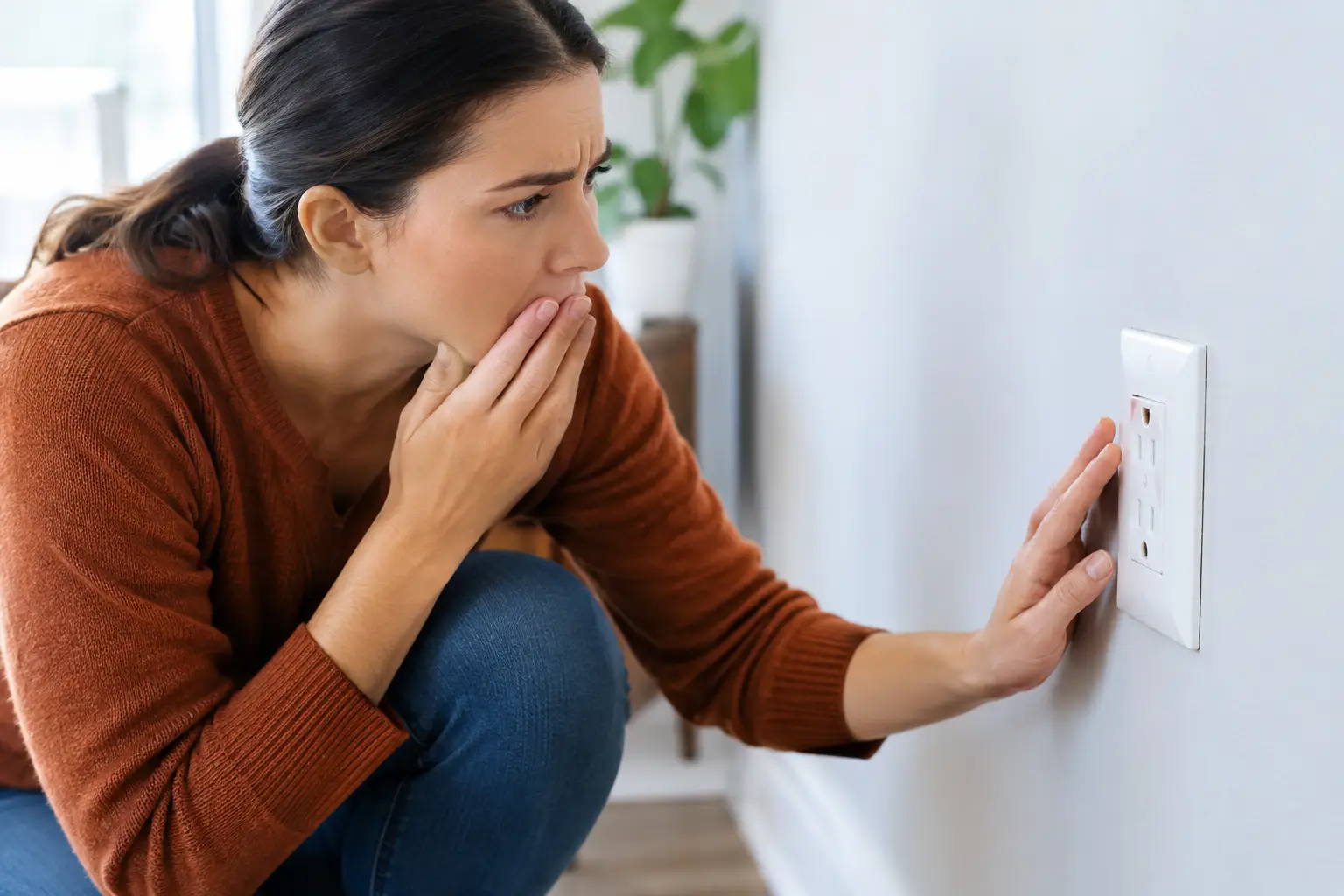
An outlet hot to touch is not a wait-and-see problem. A warm wall plate, hot plug, burning smell, or discoloration can point to excess heat behind the wall, where you cannot see it. Stop using that outlet and treat it as a potential electrical hazard until a qualified electrician can assess it.
The good news is that you do not need to diagnose the wiring yourself. Your job is to make the area safe, notice what happened before the outlet got hot, and get the right local pro involved quickly.
What to do when an outlet is hot to touch
First, stop using the outlet immediately. Do not plug in another device to test whether it still works. Do not keep charging a phone, running a space heater, or using a power strip from that receptacle just because the appliance appears to be working.
If it is safe to do so, turn off the circuit breaker that controls the outlet. Only go to the electrical panel if the area is dry and there is no active sparking, smoke, or fire. If you know which breaker serves that room, switch it off. If you are not sure, turning off the main power may be the safer choice, provided you can do it without approaching a dangerous area.
Do not touch a hot plug or pull it out by the cord. If the plug is cool enough to handle and there are no signs of arcing or smoke, you can carefully unplug the device by gripping the plug body. If it feels hot, stuck, damaged, or unsafe, leave it alone and cut power at the breaker instead.
Call 911 if you see flames, persistent smoke, or active sparking. Leave the area, keep others away, and do not throw water on an electrical fire. For a hot outlet without an active emergency, arrange an electrician visit as soon as possible.
Why a hot outlet can happen
Electrical outlets should not become hot during normal household use. A little warmth can sometimes occur with a high-draw device, but an outlet that feels hot, smells burnt, or discolors is not normal. Heat means electricity is meeting resistance somewhere it should not.
One common cause is an overloaded circuit. Space heaters, window AC units, hair dryers, microwaves, air fryers, and large power tools draw significant power. Running several high-demand items from one circuit, especially through a power strip or extension cord, can create heat at the plug, outlet, or wiring connection.
A loose wire connection is another concern. Over time, connections behind an outlet can loosen due to age, frequent use, poor installation, or movement inside the electrical box. Loose connections create resistance. Resistance creates heat. Left unresolved, that heat can damage insulation and increase fire risk.
The issue may also be a worn-out receptacle. If plugs slip out easily, feel loose, or only work when positioned a certain way, the outlet may no longer grip the plug blades properly. That poor contact can create heat at the point where the plug meets the outlet.
Damaged cords and overloaded power strips can contribute too. A hot outlet may not be the only problem. Look for melted plastic, bent plug prongs, frayed cords, cracked wall plates, dark marks, or a breaker that trips repeatedly. These clues help an electrician narrow down the cause faster.
Warning signs that need urgent attention
Some electrical problems should move to the front of your to-do list. A hot outlet paired with a burning odor, buzzing or crackling, visible scorch marks, melted plastic, sparks, or a breaker that will not stay on needs prompt professional attention.
Pay attention to patterns as well. Does the outlet heat up only when the space heater runs? Does it happen after using a power strip? Did it start after plugging in a new appliance? The device may be drawing too much power, but the outlet or circuit could still have a fault that needs repair.
If multiple outlets in the same room are warm, flickering lights appear, or switches and outlets feel loose, turn off the affected circuit and call an electrician. These can be signs of a larger wiring issue rather than one bad receptacle.
For renters, report the issue to your landlord or property manager in writing right away, especially if there is heat, odor, smoke, or discoloration. Avoid using the outlet while you wait for maintenance. Property managers should treat a hot outlet as an urgent electrical repair, not a routine cosmetic request.
What not to do
Do not cover a hot outlet with tape, furniture, or a decorative cover. Covering the area can trap heat and hide warning signs. Do not spray it with cleaner, attempt to cool it with water, or remove the faceplate while power is on.
Avoid the tempting workaround of using extension cords from another room. Extension cords are meant for temporary use, not as a permanent solution to limited outlets or a failed circuit. Plugging high-wattage appliances into extension cords or power strips can create a second hazard.
You should also avoid replacing an outlet yourself unless you have the training to work safely on residential electrical systems. A replacement receptacle may look simple, but the real problem can be inside the electrical box, at another connection on the circuit, or in the appliance being used. The visible outlet is not always the full story.
What an electrician will check
A qualified electrician can identify whether the heat came from the outlet, the plug, the appliance, or the circuit itself. They may inspect the receptacle for wear, test connections, check wire condition, look for overloads, and confirm that the circuit is correctly sized for the devices it serves.
The repair could be straightforward, such as replacing a worn receptacle or damaged cord. It could also involve tightening connections, repairing wiring, separating heavy-use appliances onto different circuits, or adding an outlet where a household is relying too heavily on power strips. The right fix depends on what caused the heat.
This is why clear photos can help at the start. A photo of the outlet, plug, wall plate, and any discoloration gives a service team useful context before anyone arrives. Never take a close-up if doing so puts you near smoke, sparks, or a damaged cord. Safety comes first.
With Ono-Fix, you can submit a photo of the visible issue and get routed toward the right local help without guessing whether you need an electrician, handyman, or another service. One photo can replace a stressful search when something in your home does not look or feel right.
Preventing outlet overheating in the future
Once the immediate issue is handled, a few habits can reduce the chance of another hot outlet. Give high-wattage appliances their own wall outlet whenever possible. Space heaters, portable AC units, and large kitchen appliances should not share crowded power strips with other devices.
Replace loose outlets and damaged cords early. If a plug falls out, a wall plate is cracked, or a cord feels hot during use, do not ignore it because the device still powers on. Small electrical warning signs can become expensive or dangerous when they are repeatedly used.
Be thoughtful about power strips. Use quality, properly rated surge protectors for low- to moderate-power electronics, and never chain one strip into another. A power strip adds outlets, but it does not add circuit capacity.
A hot outlet is your home asking for attention. Shut off the risk, keep the area clear, and let a qualified local electrician find the cause before one small warning becomes a bigger repair.