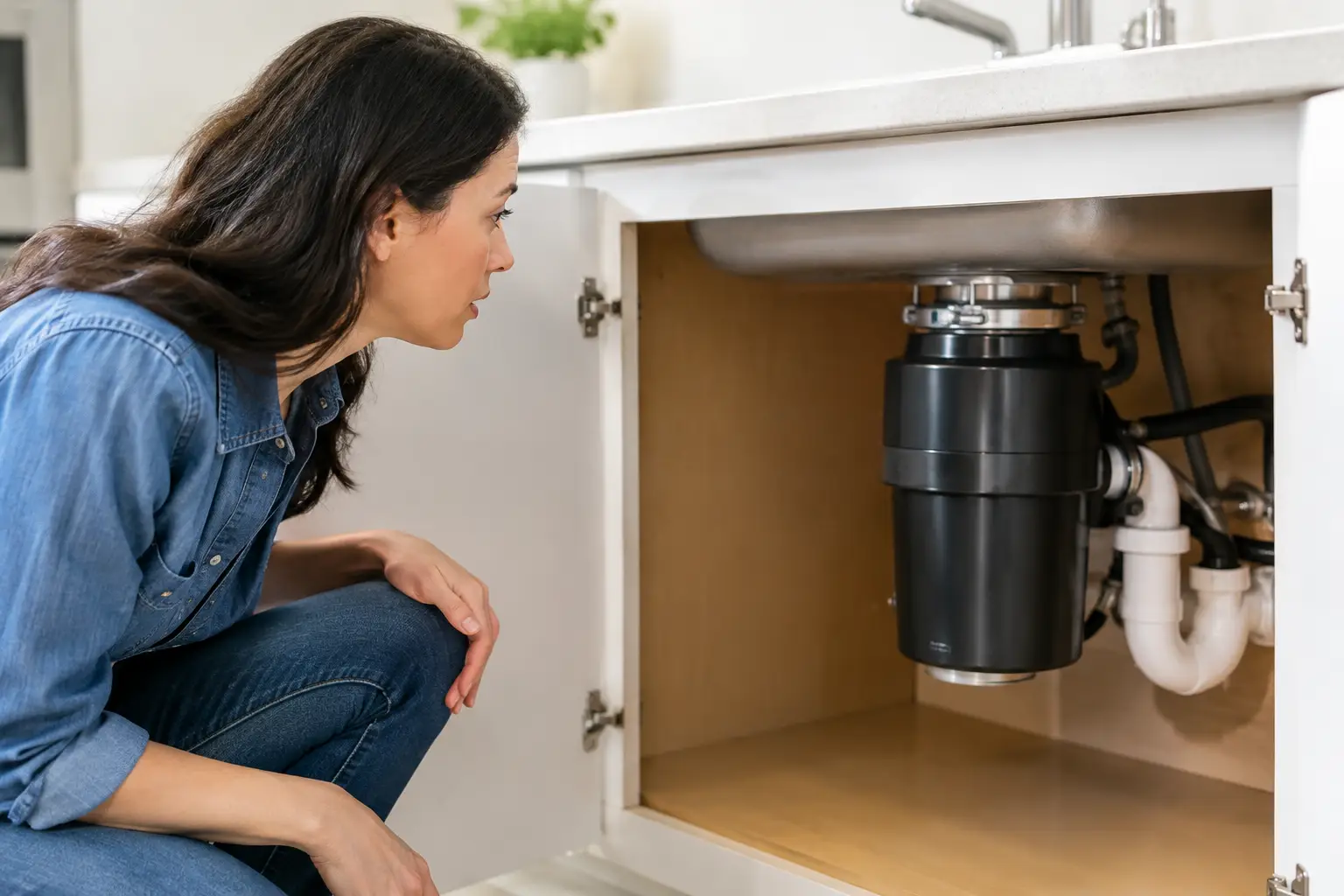
A garbage disposal that hums but will not grind is asking for attention. The motor is receiving power, but something is keeping the grinding plate from turning. For fast garbage disposal humming help, turn the unit off right away. Letting it hum can overheat the motor and turn a small kitchen interruption into a replacement job.
The good news is that a humming disposal is often caused by a simple jam. The less-good news: disposals contain sharp components, and the wrong fix can cause injuries or damage the unit. Start with safety, make a few careful checks, and know the signs that mean it is time for a trusted local pro.
Garbage Disposal Humming Help Starts With Safety
First, switch the disposal off. Do not keep flipping the switch to see whether it starts. A repeated hum does not break up the obstruction. It only puts more strain on the motor.
Next, disconnect the power. If your disposal plugs into an outlet under the sink, unplug it. If it is hardwired, turn off the correct circuit breaker before inspecting it. The wall switch alone is not enough protection when your hands or tools are near the disposal.
Never put your hand inside the drain opening, even when the power is off. A shard of glass, a bent utensil, or a sharp piece of bone may be lodged inside. Use a flashlight to look down through the sink drain. If you can clearly see a foreign object, remove it with long tongs or pliers, not your fingers.
Common culprits include a spoon that slipped from the sink, a bottle cap, fruit pits, fibrous vegetable scraps, eggshell buildup, popcorn kernels, and small bones. Sometimes the obstruction is not visible from above. Food debris can wedge below the grinding plate, where it stops the mechanism without appearing in the opening.
Why a Disposal Hums Instead of Grinding
A disposal needs enough room for its internal plate and lugs to rotate. When that movement is blocked, the motor may still receive electricity and make a low humming sound. Think of it as a stalled motor, not a disposal doing its job slowly.
This is different from a disposal that makes no sound at all. No sound can point to a tripped reset button, a failed switch, a loose connection, or an electrical issue. A hum points more often to a jam, although a worn-out motor can produce the same symptom.
The timing matters. If the disposal was running normally and began humming immediately after you added food waste, a jam is likely. If it has been sluggish for weeks, smelled hot, tripped its reset often, or hums with nothing inside, the unit may have internal wear or motor trouble. Older disposals can eventually seize from corrosion or a failing bearing, especially in hard-water areas.
Clear a Jam Without Taking Chances
After the power is disconnected, look for the disposal wrench that came with your unit. It is usually a small, hex-shaped metal tool. Many disposals have a hex socket on the bottom center of the unit, underneath the sink. Insert the wrench and move it back and forth until the grinding plate loosens.
Do not force it through a hard stop. Gentle, controlled movement is the goal. If it turns a little, reverse direction and continue working it until it moves freely. This action can release debris that is trapped inside the chamber.
No disposal wrench? Check the unit's instructions before trying an alternative. Some models can be turned with a compatible Allen wrench, while others use a different design. Avoid using random tools from above. A screwdriver can damage internal parts, and reaching down through the sink is unsafe.
Once the plate moves freely, use tongs to remove any material that has become visible. Then restore power. Press the reset button on the bottom of the disposal if it has popped out. The reset button is usually red and may need a few minutes of cooling time before it will stay engaged.
Run cold water first, then turn the disposal on briefly. Cold water helps keep grease and food particles firmer as they move through the system. If the disposal spins normally, let cold water run for another 15 to 30 seconds to clear the drain line.
If it still hums, switch it off immediately. Do not keep testing it. The obstruction may be deeper inside, or the motor may no longer be able to turn safely.
Do Not Treat the Disposal Like a Trash Can
A cleared jam is a good time to prevent the next one. Garbage disposals are designed for small amounts of soft food residue, not every scrap left after cooking. Even a powerful unit has limits.
Avoid sending grease, cooking oil, coffee grounds, pasta, rice, celery stalks, corn husks, onion skins, large amounts of potato peel, bones, pits, shells, and nonfood items into the disposal. Grease can seem harmless when it is warm, but it can cool and coat pipes farther down the line. Stringy foods can wrap around moving parts. Starchy foods expand and become paste-like in the drain.
Feed scraps gradually with cold water running. Large batches make it easier for food to compact beneath the grinding plate. When you are finished, keep the water running long enough to move debris out of the disposal and through the nearby drain pipe.
You also do not need harsh chemicals to maintain a disposal. Chemical drain cleaners can damage components and create a hazard for anyone who later works on the drain. For routine odor control, a careful rinse with cold water and a small amount of dish soap is often enough. If you have a persistent smell, slow drainage, or recurring clogs, the issue may be in the drain line rather than the disposal itself.
When a Humming Disposal Needs a Pro
Some problems are not worth a second attempt. Call for professional help if the disposal continues humming after you have safely checked for a jam and used the proper wrench. The same applies if you notice burning smells, smoke, sparks, a leaking disposal body, repeated breaker trips, or water collecting in the cabinet below the sink.
A leak at a connection may be repairable, but water leaking from the disposal housing often signals a cracked body or failed internal seal. A disposal that trips the breaker can involve more than a jam. It may have a damaged motor, an electrical fault, or a circuit issue that needs a qualified professional to assess.
Property managers and renters should also avoid dismantling a hardwired disposal or attempting electrical work. Document the visible issue, including any water under the cabinet or damage around the unit, and report it promptly. Waiting can lead to cabinet damage, mold concerns, or a larger plumbing repair.
Replacement may make more sense than repair when the disposal is older, frequently jams, leaks from its body, or has a burned-out motor. A local pro can confirm whether the problem is limited to the disposal, connected to the sink drain, or caused by an electrical issue. That distinction matters because replacing a disposal will not solve a blocked drain line or faulty switch.
Make the Next Step Easy
You should not have to guess whether a humming appliance needs a plumber, electrician, or replacement service. Take a clear photo of the disposal under the sink, the reset button area if accessible, and any visible leak or damage. Include a photo of the switch or outlet if that is where the concern appears.
With Ono-Fix, one photo can help turn a confusing kitchen problem into a clearer service path and connect you with a trusted local pro. Stop the humming, keep the power off, and let the right person handle the repair when a simple jam is no longer the answer.