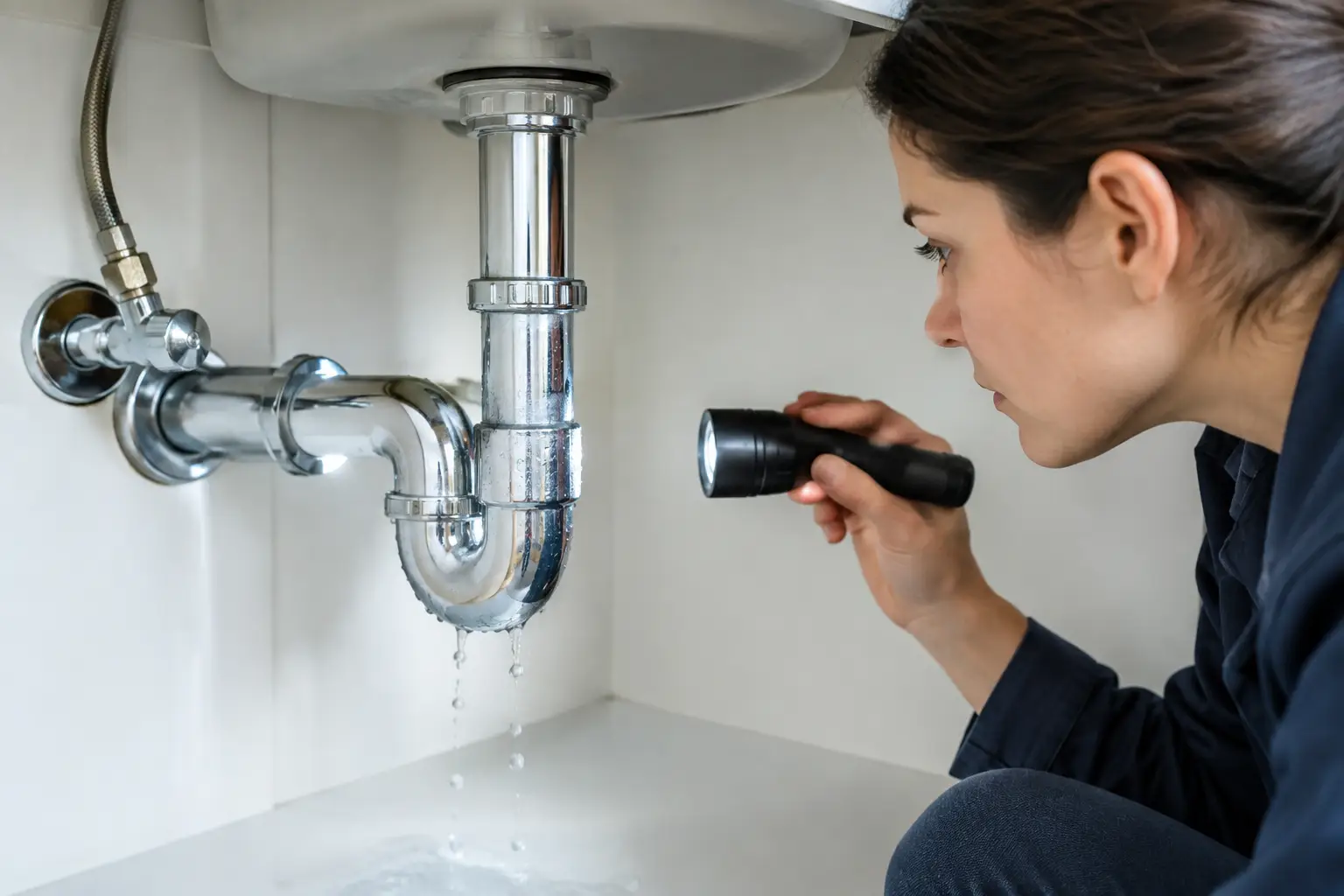
A pipe leak rarely starts with water pouring through the ceiling. More often, it starts with a cabinet that smells musty, a water bill that suddenly climbs, or a small stain that seems to grow each week. Knowing how to identify pipe leaks early can protect your floors, walls, belongings, and budget.
You do not need to be a plumbing expert to spot the warning signs. You just need to know what is normal in your home, what has changed, and when a small issue needs fast professional attention.
How to Identify Pipe Leaks Around Your Home
Some leaks are obvious. Others stay hidden behind drywall, under flooring, or inside a ceiling until the damage becomes harder and more expensive to repair. Start by looking for changes in moisture, sound, smell, and water use.
Watch for these common signs:
- Water stains, bubbling paint, peeling wallpaper, or soft spots on walls and ceilings
- A persistent musty smell, especially in bathrooms, laundry rooms, basements, and under sinks
- Damp or warped flooring near appliances, toilets, tubs, or exterior walls
- A hissing, dripping, or rushing-water sound when no fixture is running
- Mold or mildew that returns soon after cleaning
- A water bill that rises without a clear reason
One sign does not always mean a leaking pipe. A ceiling stain, for example, could come from a roof issue, a shower leak, or condensation from an HVAC line. But visible moisture should never be ignored. Take a clear photo before cleaning or moving anything. It creates a useful record of the issue and helps a professional see what changed.
Check the places leaks show up first
Start with areas where water lines are exposed or used often. Open the cabinets beneath kitchen and bathroom sinks. Run a dry paper towel along the supply lines, shutoff valves, drain connections, and the bottom of the cabinet. Even a small amount of moisture on the towel can reveal a slow leak that is easy to miss by sight alone.
Next, inspect around toilets, washing machines, dishwashers, refrigerators with water dispensers, water heaters, and utility sinks. Look at the floor, nearby walls, and connection points. A rusty valve, mineral buildup, or discolored fitting can indicate a long-term drip.
Pay close attention after using a shower or bathtub. If the ceiling below the bathroom becomes damp only after someone showers, the source could be a drain connection, supply pipe, shower pan, or failed caulk around the tub. The timing matters. Note when you first see water and what was running beforehand.
Use Your Water Meter to Check for a Hidden Leak
A water meter test is one of the simplest ways to check whether water is moving through your plumbing when it should not be. It cannot tell you exactly where the problem is, but it can confirm that further investigation is needed.
First, turn off all water use in the house. Do not run faucets, showers, dishwashers, washing machines, sprinkler systems, or ice makers during the test. Find your water meter, which is often near the curb, in a basement, garage, utility room, or exterior meter box.
Many meters have a small leak indicator, often shaped like a triangle, star, or gear. If that indicator moves while every water fixture is off, water may be flowing somewhere. If your meter does not have a visible indicator, write down the meter reading, wait 30 minutes to two hours without using water, then check it again. A change in the reading points to a possible leak.
There are a few exceptions. A running toilet, automatic water softener, irrigation system, or appliance cycle can make the meter move even when you think everything is off. If you get a positive result, check toilets and appliances before assuming the leak is inside a wall or under a slab.
Rule out a running toilet
Toilets are a frequent source of silent water loss. Remove the tank lid and listen for a faint refill sound. You can also add a few drops of food coloring to the tank, wait about 15 minutes without flushing, and check the bowl. If color appears in the bowl, water is leaking past the flapper.
This is not usually a broken pipe, but it can waste a surprising amount of water. Fixing a toilet issue may solve a high water bill. If the meter still moves after the toilet is addressed, it is time to look further.
Know the Difference Between a Leak and Condensation
Not every wet pipe is leaking. Cold water pipes can sweat in humid spaces, especially in basements, crawl spaces, and uninsulated utility areas. Condensation tends to appear as a light, even coating of moisture across the outside of a cold pipe. It may increase on hot, humid days and decrease when indoor humidity drops.
A pipe leak is more likely to create a concentrated drip, a wet fitting, corrosion, mineral crust, or water collecting below one connection. If you dry the pipe and moisture returns from a specific joint or pinhole, treat it as a likely leak.
The fix depends on the cause. Condensation may improve with pipe insulation, ventilation, or a dehumidifier. A leaking connection or damaged pipe needs a repair. When you are unsure, do not guess based on appearance alone. A photo of the wet area, the pipe connection, and the surrounding damage can help identify the right next step.
Act Fast When Water Is Active or Spreading
A slow drip can wait long enough for a scheduled repair if you can safely contain it. Active water spreading across a floor, dripping through a ceiling, or pooling near electrical outlets needs a faster response.
If you see active leaking, place a bucket or towels under the water if it is safe to do so. Move valuables away from the area. Then turn off the nearest fixture shutoff valve, such as the valves beneath a sink or behind a toilet. If you cannot isolate the source, turn off the home's main water supply.
Do not cut into a wall, remove ceiling sections, or use electrical tools near wet areas. If water is near an outlet, breaker panel, or appliance cord, keep clear and consider shutting off power to that area only if you can do so safely. A trusted local plumbing pro can locate the source, assess hidden damage, and determine whether drying or restoration work is also needed.
Take Photos That Help Get the Right Repair
A good photo can save time when you need help. Capture the full area first so the location is clear, then take a close-up of the stain, wet pipe, valve, or damaged material. Include any water pooling on the floor and a wider photo showing what is above or beside the affected area.
If the leak only appears at certain times, document that too. For example, photograph the ceiling stain after a shower, the wet cabinet after running the dishwasher, or the meter reading before and after your test. These details help separate a supply-line leak from a drain, appliance, or fixture issue.
With Ono-Fix, one photo can be the starting point for identifying the household issue and finding the appropriate trusted local professional. You do not have to decide whether you are looking at a pipe, drain, valve, appliance connection, or moisture problem before asking for help.
A dry home is easier to protect than a damaged one. If something looks wet, stained, swollen, or out of place, document it early and get a clear service path before the problem has time to spread.