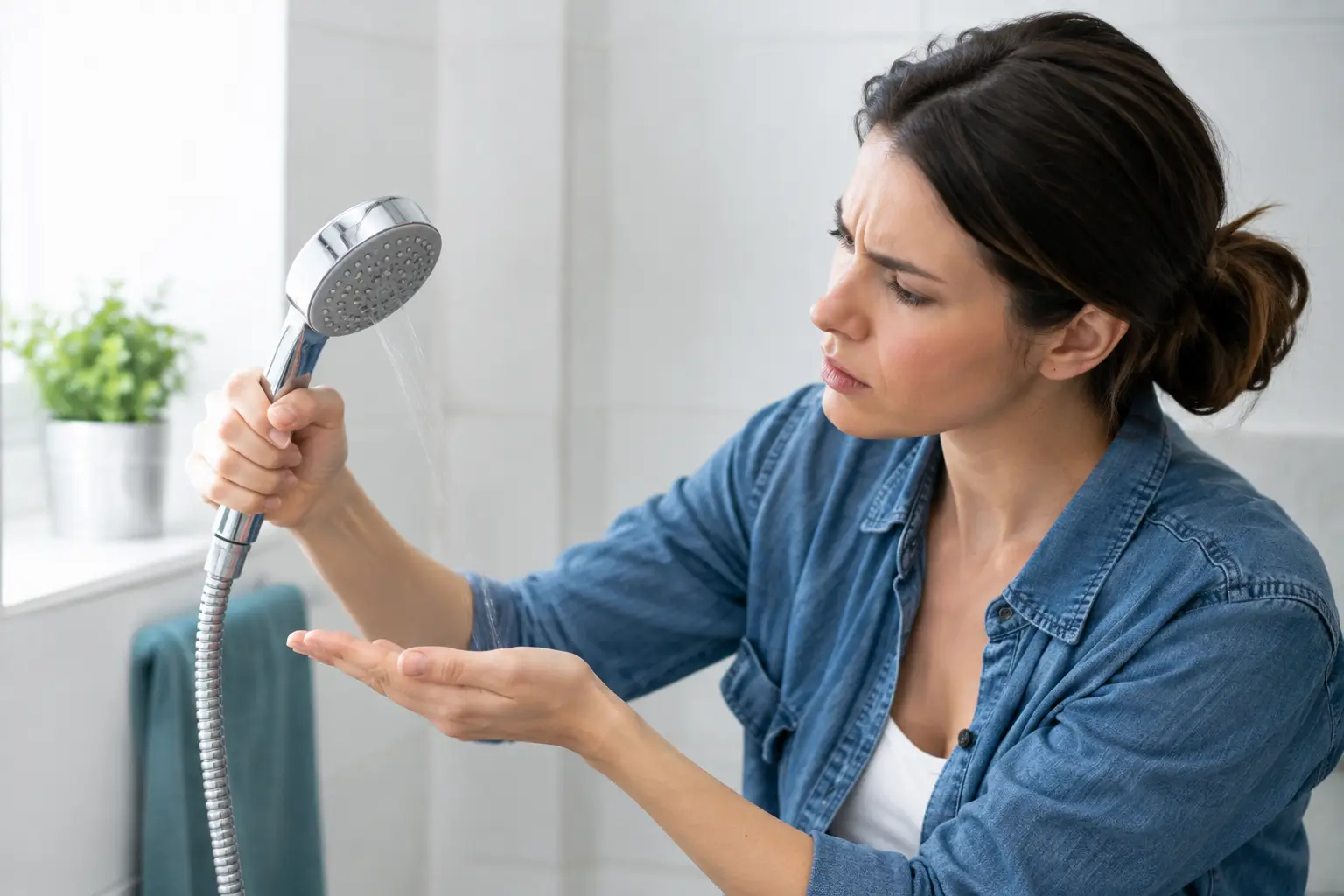
A shower that barely rinses shampoo, a kitchen faucet that takes forever to fill a pot, or a washing machine that runs weakly can turn ordinary routines into a daily frustration. This guide to low water pressure helps you narrow down what changed, what you can safely check, and when a plumbing professional should take over.
The key question is simple: Is the problem happening at one fixture, in one area of the home, or everywhere? That answer often points to the cause faster than a complicated repair search.
Guide to Low Water Pressure: Start With the Pattern
Before removing parts or buying a new fixture, test the water in a few places. Try both hot and cold water at the kitchen sink, bathroom sink, shower, and an outdoor spigot if you have one. Run one fixture at a time first, then see what happens when two fixtures run together.
If low pressure affects only one faucet or showerhead, the issue is usually local. Mineral buildup, a clogged aerator, a partially closed shutoff valve, or a worn fixture may be limiting flow. This is often the easiest and least expensive scenario.
If the problem affects one bathroom or one side of the house, the cause may be a branch line, a valve, or plumbing that has built up scale over time. If every fixture has weak flow, look beyond the faucets. The main shutoff valve, pressure regulator, water meter valve, supply line, or municipal water service could be involved.
Water pressure and water flow are related but not identical. Pressure is the force pushing water through pipes. Flow is how much water actually comes out. A clogged showerhead may have normal pressure behind it but poor flow at the nozzle. A failing pressure regulator can create a true whole-home pressure problem.
Check the Simple Causes First
Many low-pressure problems have a straightforward fix. Start with the parts you can inspect without opening walls or touching major plumbing connections.
Clean a Faucet Aerator or Showerhead
At the tip of most faucets is a small screen called an aerator. It mixes air into the water stream, reduces splashing, and catches sediment. Over time, it can clog with mineral deposits, rust flakes, or debris that entered the line after plumbing work.
Unscrew the aerator by hand if possible. Place a towel around it first if you need pliers, so you do not scratch the finish. Rinse the screen, remove visible particles, and soak mineral-covered pieces in white vinegar. Reassemble it carefully and test the faucet.
For a showerhead, remove it only if you are comfortable doing so. Soaking it in vinegar can clear deposits from the spray openings. If it remains weak after cleaning, the shower cartridge or mixing valve may be the real issue.
Make Sure Fixture Valves Are Fully Open
Sinks and toilets usually have small shutoff valves under or behind them. A valve that was partially closed during a past repair can restrict water flow. Turn the handle counterclockwise gently to make sure it is fully open. Do not force a corroded or stuck valve. Older valves can leak or fail when disturbed.
Also check whether the home’s main water shutoff valve is fully open. It may be near the water meter, where the main line enters the home, in a utility room, basement, garage, or exterior box. A gate-style valve needs to be turned fully counterclockwise. A lever-style ball valve should sit parallel to the pipe when open.
Look for a Recent Change
Timing matters. If low pressure began after city work, a water outage, a filter replacement, or a plumbing repair, sediment may have moved through the pipes. If it started after installing a new faucet or showerhead, inspect the fixture and its supply connections first.
A sudden change is different from a gradual decline. Gradual pressure loss may point to mineral buildup, corrosion, or an aging pressure regulator. Sudden whole-house loss deserves faster attention because a valve may have shifted, a supply issue may be affecting the neighborhood, or a leak may be developing.
When Low Pressure Is a Plumbing Problem
Some causes are not visible from the sink. They need diagnosis by a qualified local plumber, especially if the issue affects multiple fixtures or keeps returning after basic cleaning.
A Failing Pressure Regulator
Many homes have a pressure-reducing valve, often called a pressure regulator, installed on the main water line. Its job is to keep incoming water pressure at a safe, consistent level for the home’s plumbing.
When it wears out, you may notice weak flow throughout the house, pressure that changes dramatically from day to day, or a shower that drops to a trickle when someone turns on a faucet. Replacing or adjusting a regulator is usually not a casual DIY job. Incorrect settings can stress pipes, fixtures, and appliance connections.
Corroded or Scaled Pipes
Older galvanized steel pipes can corrode internally. Hard-water minerals can also narrow pipe openings over time. The water may look clear, but the inside of the plumbing can have enough buildup to restrict flow.
This tends to develop slowly and may affect certain rooms more than others. A plumber can determine whether the problem is isolated to a branch line or whether repiping is worth considering. The trade-off matters: targeted repairs cost less upfront, while broader replacement can prevent recurring restrictions in an aging system.
A Hidden Leak
A leak does not always leave a puddle under the sink. A damaged underground supply line, a leak inside a wall, or a problem near the water meter can reduce pressure before water reaches your fixtures.
Watch for unexplained increases in your water bill, damp spots, mildew smells, warm patches on floors, discolored walls, or the sound of running water when every fixture is off. If your water meter continues to move while no water is being used, treat it as a strong reason to call a plumber promptly.
Municipal or Shared-Building Supply Issues
If neighbors have the same problem, your home may not be the source. Water-main work, hydrant use, utility repairs, or high demand can temporarily affect service. Contact your local water utility to ask whether an outage, maintenance project, or pressure issue has been reported.
Renters and condo residents should also notify the landlord, property manager, or building maintenance team. The issue could involve a shared riser, a building booster pump, or a valve outside the unit. Avoid making changes to shared plumbing without approval.
What Not to Do
Low water pressure can make homeowners eager to turn every valve or replace every visible part. That approach can create a larger repair.
Do not adjust a pressure regulator without knowing the current pressure and safe range for your system. Do not force old shutoff valves that are seized or corroded. Do not ignore a sudden whole-home pressure drop, especially when there are signs of leakage. And do not assume a stronger showerhead will solve an underlying pipe or supply issue.
If you use a pressure gauge, attach it to an outdoor hose spigot and follow the gauge instructions. Typical residential pressure is often around 40 to 60 psi, though conditions and local requirements vary. Consistently high pressure can be as damaging as low pressure, so the goal is stable, appropriate pressure rather than simply more force.
Make the Service Request Clear From the Start
A good repair visit starts with useful details. Note whether the low pressure affects hot water, cold water, or both. Mention when it began, which fixtures are affected, whether the issue is constant or intermittent, and any recent plumbing work or water outages.
Photos can help too. Capture the faucet or showerhead, visible corrosion, leaking valves, water stains, or the pressure regulator if it is accessible. With Ono-Fix, one photo can help identify the likely household issue and route you toward the right trusted local pro, without requiring you to decide whether the problem is a fixture, pipe, valve, or main-line concern first.
Low water pressure is not always an emergency, but it is a signal worth following. Start with the pattern, handle only the simple checks you can do safely, and get qualified help when the problem reaches beyond one fixture. A clear photo and a few observations can move a frustrating trickle toward a real fix.