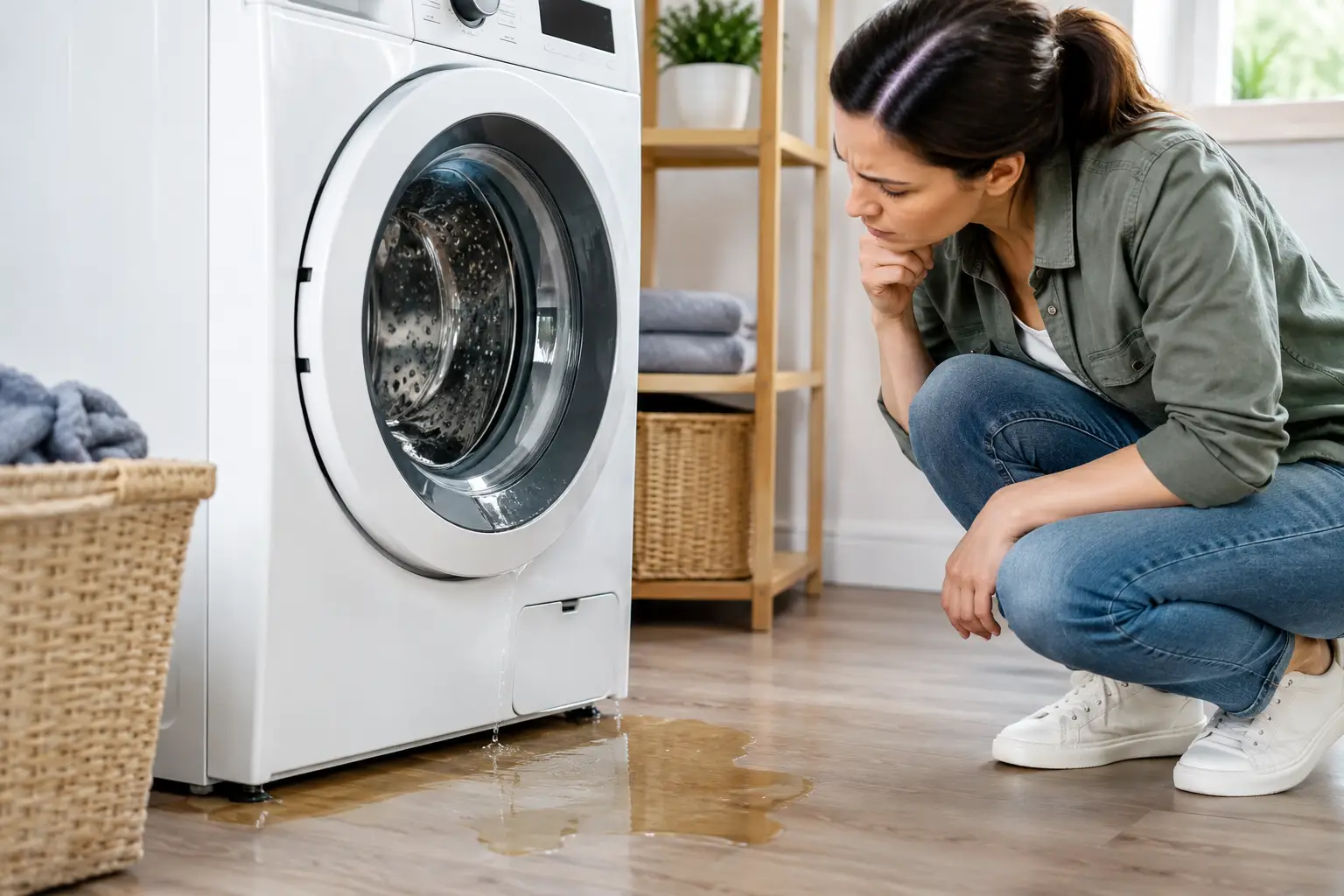
A puddle beside the washer can go from minor annoyance to damaged flooring fast. If you need washing machine leaking help, start by stopping the water and narrowing down where it is coming from. You do not need to know appliance terminology to take the right first steps.
Washing Machine Leaking Help: Start With Safety
If water is actively spreading, pause the cycle. Turn the washer off, then unplug it only if you can reach the plug without stepping in water. If the outlet, cord, or nearby electrical connections are wet, do not touch them. Shut off power at the breaker and contact a qualified professional.
Next, close the two water supply valves behind the machine. Turn them clockwise until they stop. These valves control the hot and cold water lines and can prevent a small hose failure from becoming a much larger leak.
Use towels to contain standing water, especially near walls, cabinets, or hardwood flooring. Move laundry baskets, rugs, and anything absorbent away from the area. Then take clear photos before you clean everything up. A photo of the puddle, the back of the washer, the hoses, and any visible drip gives a service professional a much better starting point.
Do not run another load just to see whether the leak happens again. A leak that looks manageable during a test cycle can travel under flooring or into a neighboring unit.
First, Find the General Leak Location
You do not need to pull the washer apart. Look for the water’s starting point and when it appeared during the cycle. That combination often points to the likely issue.
Water at the back of the machine commonly comes from the supply hoses or their connections. Water at the front may be caused by an overfull load, too much detergent, or a door-seal issue on a front-loading washer. Water underneath or near the drain area can signal a loose drain hose, a clogged household drain, or a problem inside the appliance.
A single puddle does not always reveal the source. Water can run along the washer frame, drip from a hose, and collect several feet away. Dry the visible area, inspect with a flashlight, and look for mineral buildup, damp fittings, cracked rubber, or a slow drip around connections.
If the Leak Starts While the Washer Fills
Check the hot and cold supply hoses behind the washer. Look for cracks, bulges, rusted metal fittings, or water collecting where a hose connects to the wall valve or the machine. A loose connection may need gentle tightening, but do not force it. Overtightening can damage threads, washers, or older valves.
If a hose is visibly damaged, leave the water valves off and replace it before using the machine again. Many homeowners choose braided stainless-steel hoses because they are more resistant to bursting than older rubber styles. That said, even strong hoses need periodic inspection.
A leak during filling can also come from an internal inlet valve. If the hoses appear dry but water is emerging from the rear panel or inside the cabinet, stop there. This repair usually calls for an appliance technician rather than a general plumbing fix.
If Water Appears During Washing or Spinning
For front-load washers, inspect the rubber door gasket for a trapped sock, pet hair, a torn section, or buildup that prevents a proper seal. Wipe the gasket gently and check the folds around its edge. A small object can create a gap large enough for water to escape when the drum moves.
For top-load washers, an uneven or overloaded load can splash water over the tub. This is more likely with bulky items, such as comforters, or with a washer that is not level. Try not to pack the drum tightly. The clothes need room to move and distribute evenly.
Excess detergent can also create a surprising amount of foam. Suds may push water out through areas that normally stay dry. Use only the detergent amount recommended for your washer, and use high-efficiency detergent if the machine requires it. More soap does not mean cleaner clothes.
If the Leak Happens While Draining
A drain hose problem is one of the most common reasons a washer leaks. Check whether the hose has slipped out of the standpipe, cracked, kinked, or been pushed too far down into the drain. It should be secure, but it also needs an air gap so water can drain correctly.
If water backs up from the standpipe or floor drain when the washer empties, the machine may be working properly while the household drain is clogged or draining too slowly. This is a plumbing issue. Do not keep running cycles in hopes that it clears itself. Repeated overflows can damage drywall, baseboards, and flooring.
A leak underneath the washer during draining may also be a failed internal pump or tub-to-pump hose. Those components are not always visible from the outside, and moving a heavy washer can make the situation worse. A trusted local appliance repair professional can identify the source without guesswork.
What You Can Check Without Taking the Washer Apart
A few checks are reasonable for most homeowners and renters. Make sure the water supply connections are dry and secure. Inspect the drain hose for obvious damage or movement. Confirm the washer is level by gently pressing on opposite corners. If it rocks, adjust the feet according to the manufacturer’s instructions or ask for help.
You can also clean accessible detergent residue and inspect the front-load door gasket. Beyond that, resist the urge to remove panels, disconnect internal wiring, or tip the washer forward alone. Modern washers are heavy, and a leak can involve electrical components, pressurized water lines, or sharp sheet-metal edges.
If you live in an apartment or condo, report an active leak quickly. Water does not respect unit boundaries. Your property manager may also have rules about shutoff valves, appliance repairs, and approved service providers.
When to Call a Pro Right Away
Some leaks are clear stop-and-call situations. Get professional help if you see water near an electrical outlet, smell burning, find a damaged supply hose, or notice water coming from inside the washer cabinet. Call promptly if the drain backs up, the leak reaches flooring or walls, or you cannot identify the source after checking the external hoses and door seal.
It also makes sense to call a pro when you are unsure whether the issue belongs to a plumber, appliance technician, or handyman. Choosing the wrong category can delay the repair. With Ono-Fix, you can submit a photo of the leak and visible connections to start with clearer direction and get matched with the right trusted local professional.
Prevent the Next Washer Leak
Once the immediate issue is resolved, build a quick washer check into your routine. Look behind the machine a few times each year, especially before a trip or after moving the appliance. Replace aging hoses before they fail, keep the washer level, and avoid overloading it.
If your washer sits on an upper floor, a drain pan and leak alarm can add useful protection. They will not fix a failed hose or clogged drain, but they can give you earlier warning before water reaches finished surfaces.
A washer leak is stressful because the cause is often hidden. Start with safety, capture what you can see, and stop using the machine until the source is clear. One good photo can turn a confusing puddle into the right next step.