A plug that falls out of the wall is not a small annoyance. Neither is a faceplate that feels warm after you use a lamp or phone charger. Homeowners often ask, “when do outlets need replacement?” The answer depends on what you see, feel, and smell - but some signs call for a licensed electrician right away.
Outlets wear down over time. They also reveal larger wiring problems that are hidden behind the wall. Knowing the difference can protect your devices, prevent electrical fires, and save you from guessing which kind of help to book.
When Do Outlets Need Replacement? Start With These Signs
An outlet should hold a plug securely, stay cool during normal use, and provide reliable power. If it cannot do those things, it may need replacement or a professional inspection.
Plugs fall out or feel loose
A healthy outlet grips the metal prongs of a plug firmly. If chargers, lamps, or appliance plugs slide out with little effort, the internal contacts may be worn. This becomes more common in outlets used constantly, such as those near kitchen counters, beds, and home offices.
Loose outlets can cause poor connections, arcing, and heat. Stop using the receptacle until an electrician can assess it. Do not try to bend plug prongs or wedge items into the outlet to make them fit.
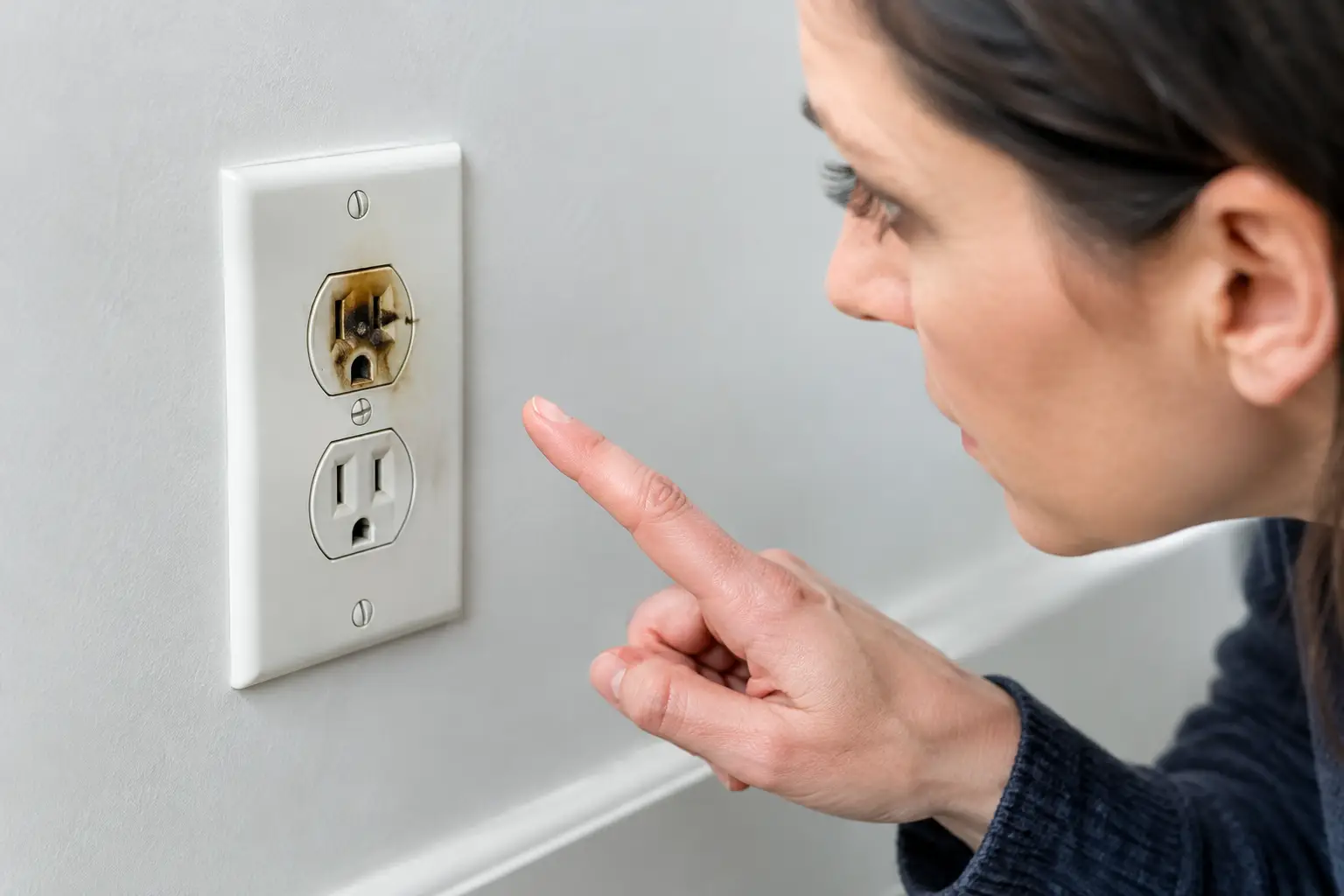
The outlet is warm, discolored, or smells burned
Heat, scorch marks, melting plastic, or a burning odor are urgent warning signs. Turn off power to that circuit at the breaker if you can do so safely. Then keep appliances unplugged and arrange for professional electrical service.
The outlet itself may be damaged, but the cause could also be loose wiring, an overloaded circuit, or a faulty connection farther inside the electrical box. Replacing the visible receptacle without finding the cause can leave the real hazard in place.
You see cracks, chips, or exposed parts
A cracked cover plate is usually easy to replace. A cracked outlet body, exposed wiring, broken slots, or a receptacle that pulls away from the wall is different. Those conditions can expose live electrical parts or allow debris and moisture into the box.
Treat visible damage as a repair priority, especially in homes with children, pets, or frequent guests. Tamper-resistant outlets can be a worthwhile replacement option in many living areas.
Power cuts in and out
A lamp that flickers when its plug moves, a charger that works only at a certain angle, or a device that repeatedly loses power can point to a failing outlet connection. Before assuming the outlet is the issue, test the device in another known-working outlet. If the device works normally elsewhere, stop using the questionable outlet.
Intermittent power is not something to ignore. It can signal a loose connection that creates heat behind the wall.
The reset button will not work
GFCI outlets have TEST and RESET buttons and are often installed near water, including bathrooms, kitchens, garages, laundry rooms, basements, and outdoor spaces. They are designed to shut off power quickly when they detect a ground fault.
If a GFCI outlet will not reset, repeatedly trips, or has no power even after you check the breaker, it needs troubleshooting. The problem may be the outlet, moisture exposure, a connected outlet downstream, or an appliance creating a fault. A qualified electrician can determine which one it is.
Older Outlets May Need an Upgrade
Not every old outlet is unsafe, but age can make an upgrade practical. Two-slot outlets, for example, do not provide a grounding path for modern three-prong plugs. That does not mean you should force a three-prong adapter into them or assume a replacement will instantly create a ground.
An electrician can explain the safe options for your home. Depending on the wiring, that may include installing a properly grounded outlet, adding GFCI protection where permitted, or updating part of the circuit. The right choice depends on the existing electrical system, local code requirements, and how the outlet will be used.
Outlets may also need replacement after water damage, a pest issue, remodeling work, or an electrical surge. Even if the plastic looks fine, hidden corrosion or loose connections can affect performance. If an outlet was submerged or exposed to significant moisture, have it inspected before using it again.
Replacement Is Not Always the Whole Fix
It is easy to focus on the outlet because it is the part you can see. But an outlet can be the symptom, not the source.
For example, a kitchen outlet that feels warm may be overloaded by high-demand appliances. A bedroom outlet that stops working may be connected to a tripped GFCI elsewhere in the home. Frequent breaker trips could indicate too much demand on the circuit, damaged wiring, or a problem appliance.
This is why a trusted local electrician should check the circuit when warning signs repeat. They can determine whether you need one new receptacle, a new GFCI outlet, a dedicated circuit for an appliance, wiring repair, or a panel-related evaluation. That clarity matters more than a quick cosmetic swap.
What You Can Check Safely Before Booking Help
You do not need electrical expertise to gather useful details. First, unplug anything connected to the affected outlet. Check whether the breaker has tripped and whether nearby GFCI outlets need to be reset. Test a small working device, such as a lamp, in another outlet to rule out a faulty charger or appliance.
Then look for visible clues: discoloration, cracks, loose mounting, moisture, or scorch marks. Notice whether the problem happens with one device or every device. These details help the electrician arrive prepared.
Do not remove the outlet cover, touch exposed wires, or work inside an electrical box unless you are qualified to do so. Turning off a breaker does not make a DIY repair risk-free, particularly in older homes with confusing or inaccurate panel labels.
When to Treat an Outlet Problem as Urgent
Call for prompt professional help if you notice smoke, sparking, a burning smell, significant heat, melted plastic, buzzing, or repeated breaker trips. If there is an active fire risk, leave the area and contact emergency services.
For less immediate issues, such as a loose plug or dead outlet, schedule service soon rather than waiting for the outlet to fail completely. Electrical problems rarely become more convenient with time. Early service is usually simpler, safer, and less disruptive than waiting until a circuit stops working.
Renters should report outlet problems to their landlord or property manager promptly. Property managers can document the issue, protect residents, and send the right licensed professional. Homeowners can save time by taking a clear photo of the outlet and surrounding wall before requesting help. With Ono-Fix, that photo can be the starting point for identifying the issue and finding the right local pro.
A dependable outlet is easy to overlook because it works quietly every day. When it becomes loose, hot, damaged, or unreliable, trust the signal. Take a photo, stop using it if there is any safety concern, and get qualified help before a small wall fixture becomes a larger home problem.