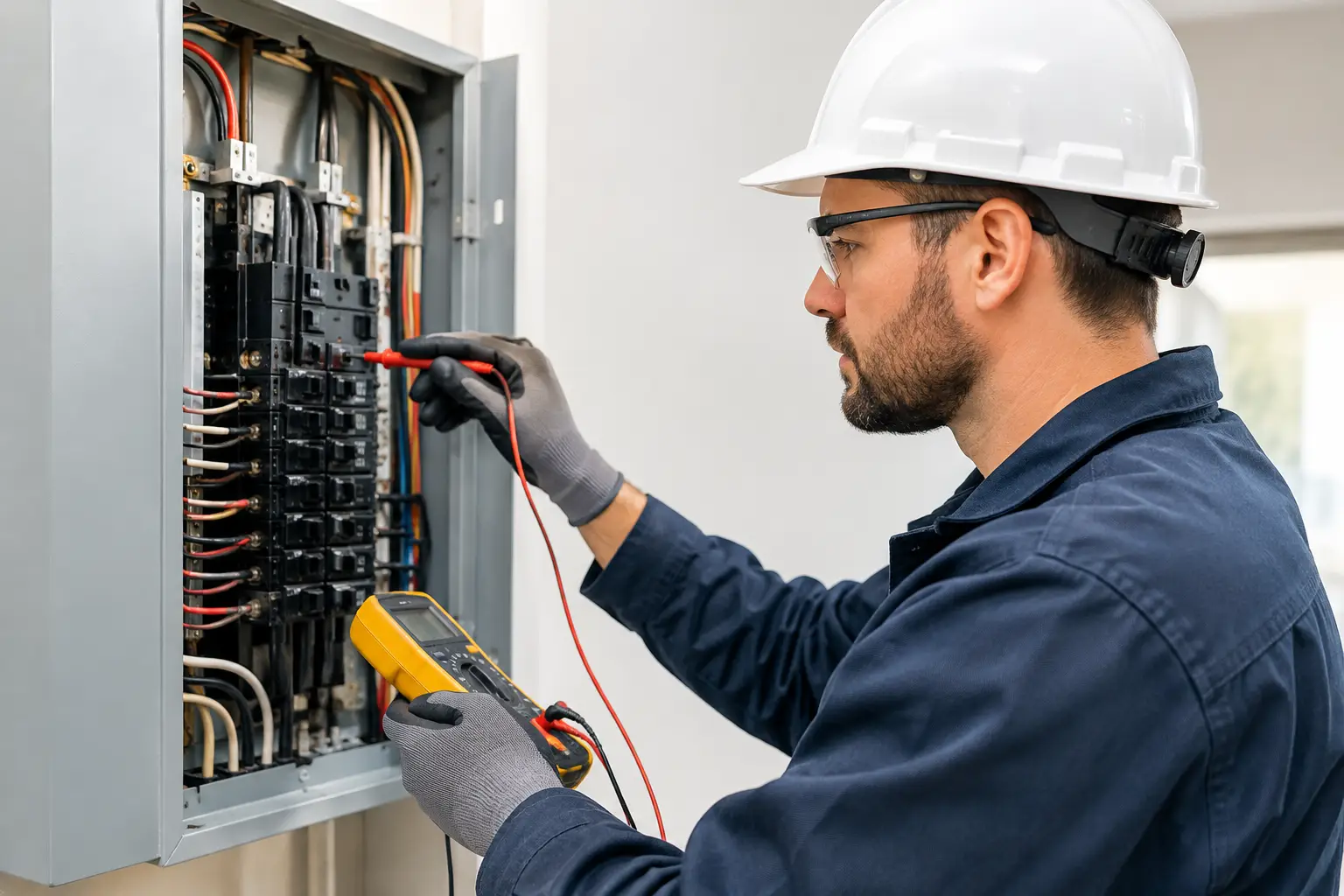
A breaker that trips once can be annoying. A breaker that keeps tripping, feels hot, buzzes, or leaves part of your home without power is a safety signal. Knowing how to diagnose circuit breaker problems starts with noticing the pattern, not taking apart your electrical panel.
Your breaker panel protects your wiring from overloads and faults. When it shuts power off, it may be doing exactly what it was designed to do. The goal is to identify whether the problem is a one-time overload, a specific appliance, a damaged outlet, or an issue that needs a trusted local electrician right away.
Start With the Safety Check
Before you reset anything, look and listen. If you smell burning plastic, see smoke, notice scorch marks near an outlet or panel, hear crackling or persistent buzzing, or feel warmth coming from the breaker box, stop there. Do not reset the breaker or touch the panel. Turn off power only if you can do so safely without approaching a damaged area, then contact an electrician or emergency services if there is an active fire risk.
Water changes the situation, too. A tripped breaker near a wet basement, leaking pipe, damp outlet, flooded room, or outdoor circuit needs professional attention. Electricity and moisture are not a troubleshooting project.
If none of those warning signs are present, you can move on to a basic, low-risk check from outside the panel. You do not need to remove the panel cover, handle wiring, or test live electrical components to make a useful first diagnosis.
How to Diagnose a Circuit Breaker That Tripped
Open the panel door and look for a breaker that is not fully in the ON position. A tripped breaker often sits in the middle between ON and OFF, though its position can be subtle. The panel directory may tell you which rooms or appliances that breaker serves.
To reset it, push the breaker firmly all the way to OFF first, then switch it back to ON. If it stays on, restore devices gradually. If it immediately trips again, leave it off. Repeated resetting can mask a real fault and may put stress on the circuit.
The timing of the trip is one of the best clues. Ask what was running immediately before the power went out. A space heater, microwave, air fryer, hair dryer, vacuum, portable AC, or power tool can overload a circuit, especially when several high-draw devices share the same room.
A simple overload often happens when too much is plugged in at once. For example, a bedroom circuit may trip when a space heater runs alongside a gaming setup, TV, lamps, and chargers. Unplug or turn off the larger devices, reset the breaker once, and add items back one at a time. If the breaker remains on after reducing the load, the circuit may simply need better load management or, for frequent use, an electrician’s assessment of your home’s capacity.
Separate an Overload From a Fault
An overload is not the same as an electrical fault. The difference matters because an overload may have a straightforward fix, while a fault can point to damaged equipment, wiring, or an outlet.
If the breaker trips only when several appliances are operating together, overload is likely. If it trips every time one particular appliance is plugged in or switched on, unplug that appliance and leave it unplugged. The appliance, its cord, or the outlet it uses may be damaged.
Try not to keep testing the same suspect device. A frayed cord, loose plug, unusual heat, burning smell, or visible damage is enough reason to stop using it. If the breaker stays on after the device is removed, arrange repair or replacement for the appliance. If it still trips with everything unplugged, the issue is more likely within the circuit itself.
Pay attention to whether the breaker serves lights, outlets, or a major fixed appliance. A breaker that trips when you turn on a light may indicate a failing fixture, switch, bulb, or wiring connection. A breaker tied to a dishwasher, disposal, HVAC equipment, water heater, or dryer can involve a dedicated circuit and should be handled with extra caution. These systems are not good candidates for trial-and-error repairs.
Check GFCI Outlets Before Assuming the Breaker Failed
Kitchens, bathrooms, garages, basements, laundry areas, exterior outlets, and other areas near water often use GFCI protection. A GFCI outlet has TEST and RESET buttons and may shut off power to several outlets downstream.
If outlets are dead but the breaker does not appear tripped, look for a GFCI outlet in the same area or an adjacent room. Press RESET once. If it resets and power returns, monitor the area. If it will not reset, trips repeatedly, or there is any moisture present, stop and call a professional.
This is a common source of confusion in homes and rentals. The outlet that controls the problem may be behind a countertop appliance, in a garage, or in a bathroom that seems unrelated to the room without power. That does not mean you should start opening outlets. A visual check is enough for the homeowner side of diagnosis.
Signs the Circuit Breaker Itself May Be the Problem
Breakers can wear out, but they are less often the root cause than people assume. A breaker may be suspect if it will not stay on even after all devices on that circuit are unplugged, if it feels hot, looks damaged, makes noise, or trips with no obvious load.
Age can be a factor, especially in older panels or homes with a history of electrical additions. But a replacement breaker is not automatically the answer. A breaker that trips may be responding correctly to a loose connection, damaged wire, overloaded circuit, or failing appliance. Replacing it without finding the cause can remove a layer of protection.
Do not force a breaker into position, tape it on, install a larger breaker, or swap breakers yourself. A larger breaker does not create more safe capacity for the wiring behind the wall. It can create a serious overheating risk.
When to Call an Electrician Immediately
Some symptoms call for fast professional help rather than more troubleshooting. Contact a qualified electrician if you notice any of the following:
- Burning odors, smoke, sparks, buzzing, heat, discoloration, or melted plastic at the panel, outlets, switches, or plugs.
- A breaker that trips repeatedly with nothing plugged into the affected circuit.
- Power loss connected to water, storm damage, a leak, or a wet electrical area.
- Frequent flickering lights, shocks or tingling from appliances, or outlets that stop working unpredictably.
- A main breaker issue, a panel that will not reset, or multiple circuits failing at the same time.
For renters, report the issue to your landlord or property manager promptly, especially when it involves the panel, fixed wiring, or repeated outages. Property managers should treat recurring breaker trips as a maintenance and safety priority, not just a tenant convenience request.
Make the Service Visit Faster
A few details can help an electrician reach the right answer faster. Note which breaker trips, what rooms lose power, what was running when it happened, whether the trip is immediate or delayed, and whether a GFCI reset changes anything. A clear photo of the panel directory, the breaker position, and any visible outlet damage can also help describe the situation accurately.
Do not photograph exposed wires or move objects to reach a damaged outlet. Capture only what is safely visible. Ono-Fix can help turn a photo of a visible home issue into a clearer path to the right local service professional, without requiring you to sort through electrical terms or guess at the trade.
A circuit breaker is a protective device, not an inconvenience to defeat. Reset it once when conditions are safe, reduce the load, and watch what happens. When the pattern points to heat, damage, moisture, repeated trips, or uncertainty, leave the circuit off and let a qualified electrician take it from there.