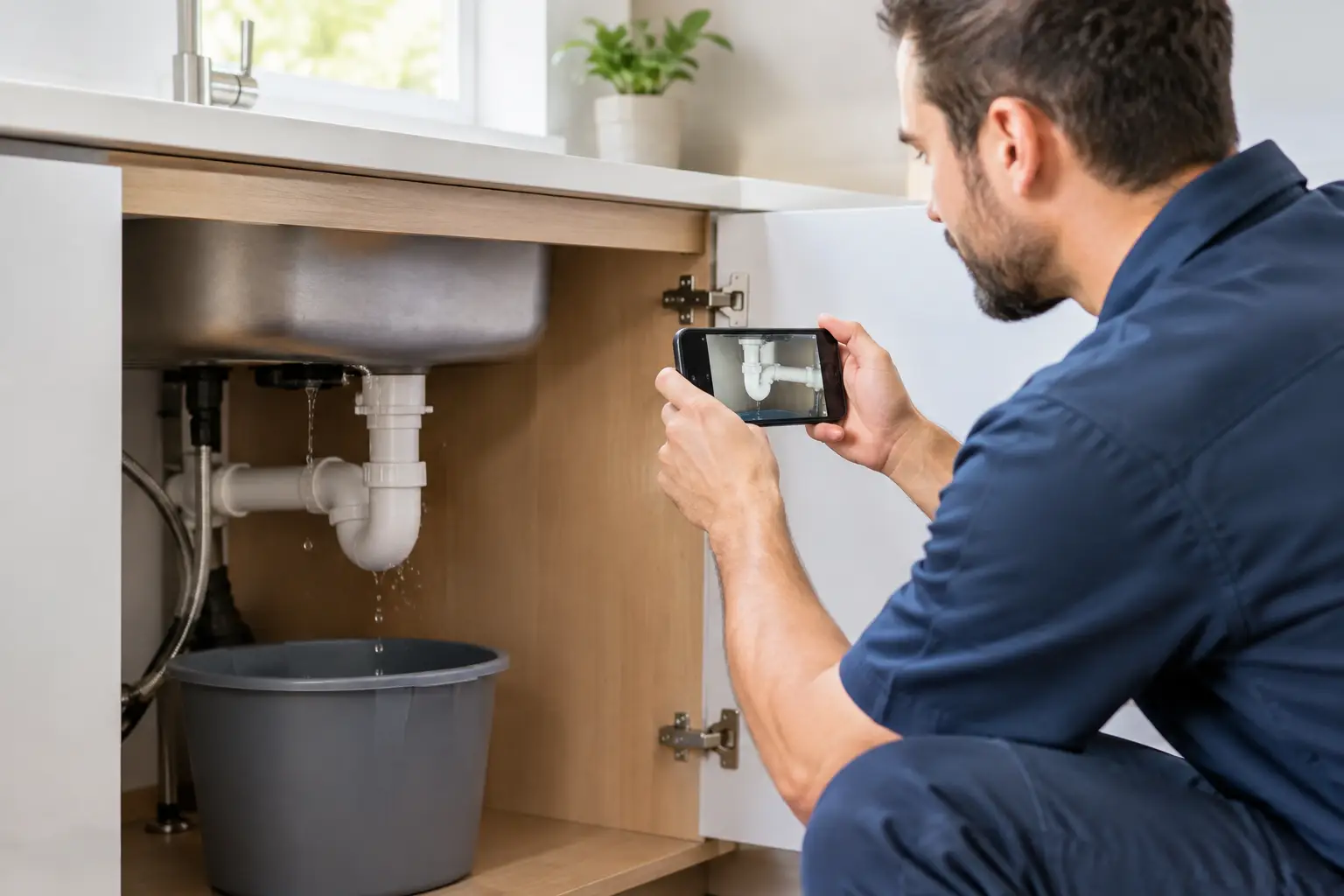
At 7:10 a.m., water was collecting beneath Maya’s kitchen sink. She had a meeting in 50 minutes, a toddler to get ready, and no idea whether she needed a plumber, a handyman, or an expensive emergency visit. This photo triage success story starts the way many home problems do: with a visible issue, limited time, and zero interest in becoming a repair expert before breakfast.
Maya did not need to name the broken part. She opened the cabinet, moved a few cleaning supplies aside, and took a clear photo of the drip, the pipe connection, and the water below. That one image gave the service request a much better starting point than a rushed description like, “There’s a leak under the sink.”
The goal was not to diagnose every detail from a photo. The goal was simpler: identify the likely problem area, route the request toward the right kind of help, and make the next step feel clear.
A Photo Triage Success Story: From Drip to Repair
The leak appeared to be coming from a connection under the sink, not from the faucet itself. That distinction mattered. A faucet issue may call for a different repair approach than a loose drain connection, a failing supply line, or water coming from a dishwasher hose.
With photo-first triage, Maya’s request could be directed toward a qualified local plumbing professional instead of landing in a broad service category where she would have to guess. She could add a short note about when she first saw the water and whether the leak continued when the faucet was off. The photo carried the visual context. Her note added the details a professional would want before arriving.
That made the booking process more focused. The plumber had a clearer picture of the likely issue before the visit and could plan for a common under-sink repair. Maya had a better sense that she was contacting the right pro, rather than hoping a generic request reached someone who handled plumbing.
Later that day, the professional inspected the connection in person, confirmed the source of the leak, replaced the worn component, and checked the surrounding fittings. The cabinet was dry again. No long search. No calling three different service categories. No trying to explain pipes, valves, and connections she could not confidently identify.
That is what success looked like: a small issue resolved before it had the chance to become cabinet damage, a warped floor, or a much more stressful problem.
Why the Photo Changed the Next Step
Homeowners are often told to “know what you need” before requesting service. That is not realistic when the problem is behind an appliance, under a sink, above a ceiling tile, or inside a wall. Most people can see that something is wrong. They should not need trade knowledge to get help.
A photo gives the request a practical layer of context. It can show location, material, visible damage, standing water, loose hardware, stains, exposed wiring, or the general setup around the issue. That context helps separate a likely plumbing request from an electrical, cleaning, assembly, or general repair request.
It also reduces the pressure to use the perfect words. If a dining chair is wobbling, a homeowner may not know whether the problem is a stripped screw, a cracked joint, or a missing bracket. If an outlet cover is warm or discolored, they may not know the electrical term for what they are seeing. A clear photo lets the visible problem lead.
With Ono-Fix, that is the point of the workflow. One Photo. One Solution. The photo helps turn uncertainty into a clearer service path, then connects the customer with trusted local help for the job.
The Photo Does Not Replace the Pro
Photo triage is useful because it improves the first decision, not because it pretends every home issue can be solved from an image. A qualified professional still needs to inspect the problem, verify what is happening, and recommend the proper repair or service.
Lighting, camera angle, hidden damage, and safety risks can all affect what a photo reveals. A stain on drywall, for example, may be old or may point to an active leak. A flickering light could involve a bulb, a fixture, a switch, or wiring. The right service professional confirms the facts on site.
That is a good trade-off. The customer gets a faster, more confident route to the right category of help, while the professional retains the expertise to assess the actual condition and complete the work safely.
What Made This Repair Go Smoothly
Maya’s photo was useful because it showed enough of the scene. The drip was visible, but so were the pipes around it and the bottom of the cabinet. A close-up alone may have made it harder to understand where the issue was located.
For most household requests, a few simple choices can make a photo more helpful:
- Turn on a nearby light or use a flashlight so the issue is visible.
- Take one wider photo to show the location and one closer photo of the problem area.
- Move towels, storage bins, or clutter only if it is safe to do so.
- Add a short note about when the problem happens, such as “only when the dishwasher runs” or “started after the storm.”
Safety comes first. Do not touch exposed wires, stand in water near an electrical issue, climb onto unstable furniture, or take apart plumbing connections to get a better image. If there is smoke, a burning smell, sparking, a major leak, or another immediate hazard, contact the appropriate emergency service or utility provider first.
The Real Win Is Less Decision Fatigue
The repair itself took skill. But the biggest obstacle came before the professional arrived: Maya did not know where to begin.
That moment of hesitation is familiar. A homeowner sees water on the floor and starts searching broad phrases. A renter notices a damaged outlet cover and wonders if it is safe to wait. A property manager gets a tenant photo of a loose cabinet hinge and must decide whether to send maintenance, a handyman, or a specialist.
Traditional service searches can turn each of those moments into a category-selection test. Photo triage changes the first question from “What kind of professional do I need?” to “What do you see?” That is a much easier question to answer.
The result is not just speed. It is confidence. Customers can move forward without feeling foolish for not knowing the name of a part or the scope of a repair. Local professionals receive requests with better visual context. Everyone starts closer to the right solution.
A Better First Move for Everyday Home Problems
Not every household issue needs urgent help. A loose drawer pull can wait. A small paint touch-up may be a weekend task. But a visible problem is still worth documenting while it is fresh, especially when it involves water, electricity, appliances, structural damage, or something that is getting worse.
Take the photo before you clean up the evidence. Capture the leak before the towel hides its source. Photograph the stain before repainting. Show the broken furniture connection before moving the piece. The image may be the fastest way to explain what words cannot.
When a home problem interrupts your day, you do not need a better vocabulary. You need a clear first move. Take a photo, describe what you noticed, and let the right local professional help turn the problem into a finished repair.