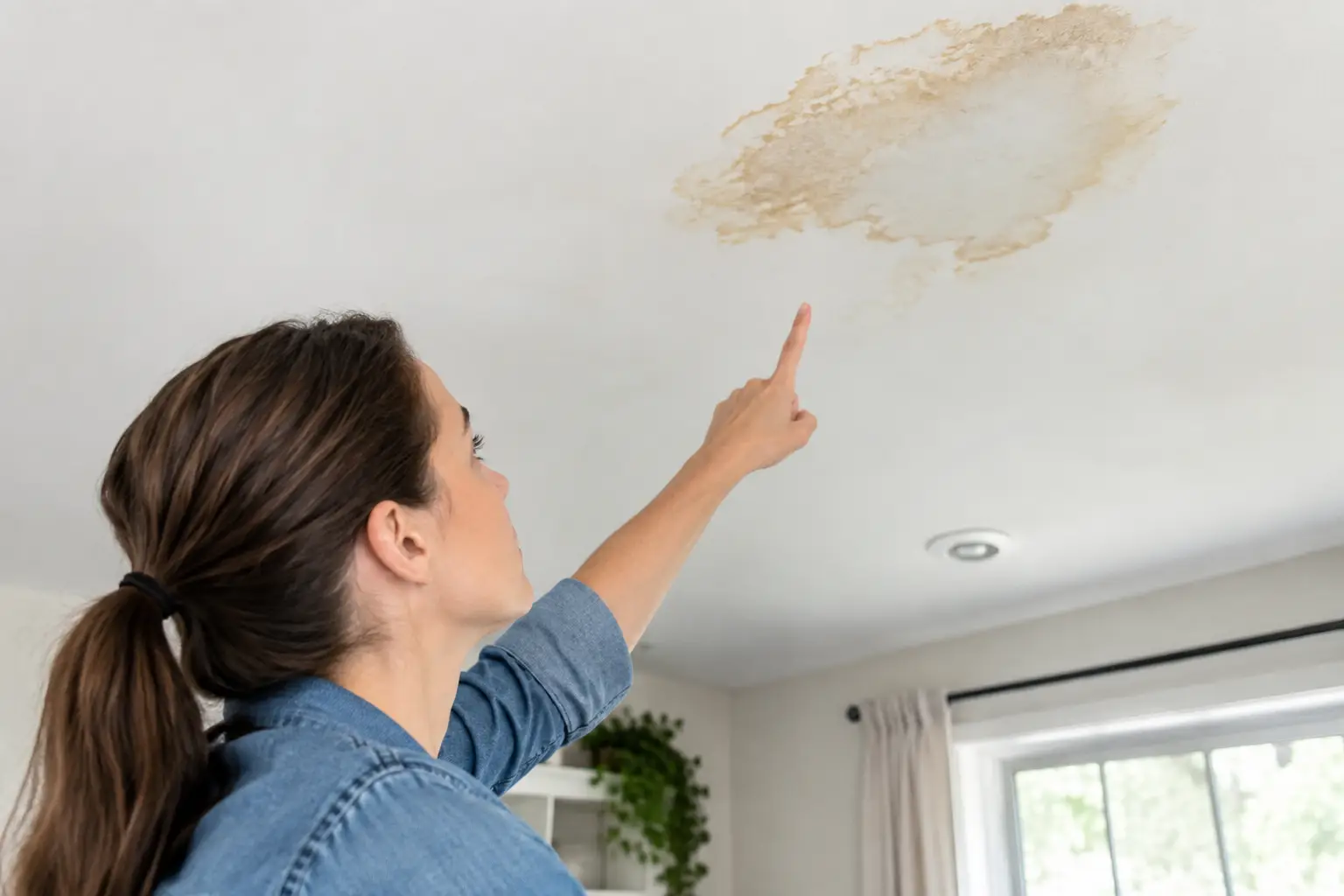
A brown ring above the couch or a yellow patch near the hallway light is more than a paint problem. The water stain ceiling cause is often an active or past moisture issue, and the location of that mark can offer useful clues. The goal is not to become a leak detective overnight. It is to protect your home, avoid a bigger repair, and get the right local pro involved quickly.
A ceiling can stay stained long after the leak has stopped. It can also look dry while water is still moving above it. That is why timing matters: a fresh, expanding, soft, or dripping stain deserves attention now, not after the next storm.
What a Water Stain Ceiling Cause Can Tell You
Water follows gravity, framing, pipes, and insulation before it reaches the ceiling surface. The stain you see is not always directly below the original leak. Still, its position, appearance, and timing can narrow down the likely source.
A stain directly beneath a bathroom, kitchen, laundry room, or upstairs utility area often points to plumbing. A stain that appears after heavy rain, snow melt, or strong wind is more likely related to the roof, flashing, gutters, chimney, skylight, or an exterior wall opening. A patch near an air vent, duct, or ceiling register may be condensation from HVAC equipment or poorly insulated ductwork.
Color alone cannot diagnose the issue. Yellow, tan, brown, or gray rings commonly develop as water carries dust, wood tannins, rust, or other residue through drywall. The more useful question is whether the stain is changing. Take a photo, note the date, and check again after rain, shower use, laundry cycles, or air conditioner operation.
The Most Common Causes of Ceiling Water Stains
A plumbing leak above the ceiling
Leaking supply lines, drainpipes, toilet seals, shower pans, tubs, and appliance connections are frequent causes in multi-level homes and apartments. A small drain leak may only show up when someone showers or runs a washing machine. A pressurized supply-line leak can create damage faster and may continue even when no fixture is in use.
Look for patterns. Does the stain get darker after an upstairs shower? Is it below a bathroom vanity, toilet, refrigerator line, dishwasher, or laundry area? Those details help determine whether a plumber should be the first call.
A roof or exterior leak
If a stain appears on the top-floor ceiling after weather, start thinking about the roof system. Missing or damaged shingles are one possibility, but leaks also happen around roof penetrations and transitions. Flashing near chimneys, vents, skylights, valleys, and dormers can fail even when the roof surface looks mostly fine from the ground.
Clogged gutters can make the problem worse by pushing water where it does not belong. But do not assume gutters are the sole answer. Water may have entered through a separate roof or siding issue and traveled before reaching the ceiling.
HVAC condensation or a clogged drain line
Air conditioners remove moisture from the air. That moisture needs a clear path out through a condensate drain line. When the line clogs, a drain pan cracks, or an evaporator coil freezes and thaws, water can overflow into ceilings, walls, or closets.
This cause is especially likely when a stain shows up during hot, humid weather or when the cooling system is running heavily. Condensation can also form on uninsulated ductwork in attics, crawlspaces, and humid areas. An HVAC technician can identify whether the issue is drainage, insulation, airflow, or equipment performance.
Condensation from everyday humidity
Not every ceiling stain comes from a broken pipe or roof opening. Bathrooms with weak ventilation, kitchens with limited exhaust, and rooms with high indoor humidity can develop moisture buildup. Over time, this may lead to staining, peeling paint, or mildew around vents and exterior corners.
This is usually a slower problem than a plumbing leak. Even so, it should not be ignored. Better ventilation, consistent use of exhaust fans, and humidity control can prevent repeat damage after the ceiling is repaired.
How to Check the Stain Without Making Things Worse
Start safely. If water is near a ceiling light, fan, smoke detector, outlet, or electrical panel, do not touch the fixture or stand in pooled water. Turn off power to the affected area only if you can do so safely, then contact a qualified electrician or emergency service professional. Water and electricity are not a DIY combination.
Next, look at the ceiling from a distance. A sagging, bulging, or noticeably soft area may be holding water behind the drywall. Keep people, pets, furniture, and valuables out from underneath it. Do not poke or cut into a swollen ceiling unless you know how to control the water and assess the electrical risks.
If it is safe to inspect nearby areas, check the room above and look inside accessible cabinets or utility closets. You may find damp flooring, a loose supply connection, an overflowing condensate pan, or a visible drip. A flashlight, dry paper towel, and a few clear photos are enough to document what you see. You do not need to disassemble plumbing or climb onto the roof to make a smart next move.
Move furniture away from the stain, place a container under active drips, and use towels to protect flooring. If a pipe or appliance connection is clearly leaking, shut off the local water valve if you know where it is and can reach it safely. If you cannot isolate the leak, shut off the home’s main water supply and call for help.
When a Ceiling Stain Is an Urgent Repair
An old, dry mark with no change may allow time for a scheduled inspection. An active leak does not. Call for prompt professional help if the stain is spreading, water is dripping, drywall is sagging, paint is bubbling, or you notice a musty odor. The same applies if the issue is close to electrical equipment or follows a major storm.
Renters should document the problem with photos and notify the property manager or landlord right away. Property managers should treat the report as a potential source issue, not simply a paint touch-up. Repainting before finding the moisture source can hide the warning sign while damage continues behind the surface.
For homeowners, the right trade depends on the clues. A plumbing pattern usually needs a plumber. Weather-related top-floor damage may need a roofer. Cooling-season moisture around ducts or an air handler often calls for HVAC service. When the cause is unclear, a qualified home repair professional can assess the area and guide the next step.
Why Fixing the Source Comes Before Painting
Stain-blocking primer and fresh paint can restore the ceiling, but only after the area is fully dry and the leak is resolved. Paint applied too soon may blister, discolor, or trap moisture. If insulation or drywall has stayed wet, it may need to be removed and replaced rather than covered.
There is a trade-off here. A small, confirmed, one-time spill may need only drying and cosmetic repair. Ongoing moisture can affect framing, insulation, flooring, and indoor air quality. Spending a little time on diagnosis can prevent a much larger restoration project later.
If you are unsure what trade to call, start with what you can see. Take one clear photo of the stain and another of the nearest fixture, vent, roofline, or room above it. Ono-Fix can use that visual context to help identify the likely issue and connect you with a trusted local pro, without asking you to sort through service categories first.
A ceiling stain is your home asking for attention. Photograph it, watch for change, protect the area, and act on the clues before a small mark becomes a larger repair.